Are ASC+ campaigns fading in their automation, resulting in low conversion rates?
This isn’t Meta’s fault – It’s you…!
Advantage Shopping Campaigns (ASC+) need clean first-party data signals to optimize conversions effectively.
Meta says,

First-party data (1PD) helps Meta Andromeda, a new updated algorithm, to learn better by providing more detailed signals. This results in improved performance, smarter ad targeting, and higher conversion rates. If you’re trying to improve conversions in ASC+ campaigns using first-party data.
Keep reading to know why ASC+ campaigns need strong signals, the one-stop solution, along with real-world case studies to prove Meta’s above statement. (Towards the end, there is a step-by-step playbook to knock your ASC+). Let’s dive in.

Why ASC+ Campaigns Need Strong First-Party Data Signals?
Meta’s Advantage+ Shopping Campaigns have gone full AI & machine learning, and that’s both a blessing and a curse.
Meta’s Andromeda engine powers ASC+ with sequential learning, which means it studies each user action in the order it happens, like (every click, add-to-cart, and purchase) helps the system learn who’s most likely to convert next.
But if your signals are missing or broken, Andromeda can’t connect the dots. It’s like handing Meta half the puzzle and expecting a full picture.
That’s why clean first-party data matters. It helps ASC+ learn faster, predict smarter, and scale your campaigns without wasting ad spend
It learns from your conversion signals like (Add to Cart, Purchase, and Click) to figure out who’s most likely to buy next. The better the signals, the faster it learns
But here’s the problem: not all signals are created equal.
Strong identifiers like (email, phone number, browser ID, and click ID) give Meta’s algorithm something real to focus on. Weak signals like name, gender, or location don’t make much difference.
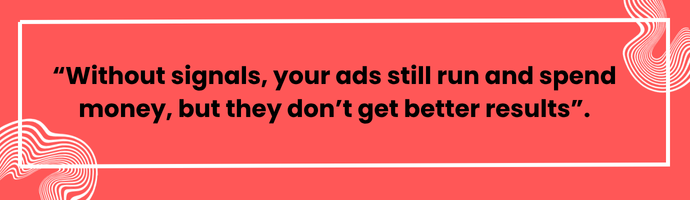
So when you feed ASC+ weak or incomplete data, it keeps spending but doesn’t really learn.
And that’s the silent killer: your ads still run, but your ROAS is flatlining. Let’s look into the core problem of the ASC+ campaign
What are the Common Problems: Broken Attribution & Signal Dilution?
Have you ever wondered why the ASC+ campaign feels like they are running blind?
When your conversion data is missing or messy, Meta can’t see the full picture. It doesn’t know who is most likely to buy, which audience to target, or which products to promote. This causes broken attribution, weak signals, and your ROAS stays flat.
If the signal you send is broken, Meta can’t learn properly, and feeding trashed data makes the learning algorithm work like garbage.
The core problem pinpoints two major issues: one, broken attribution, and two, signal dilution.
Let me break it down in detail about them.
Broken Attribution
Attribution helps Meta to connect the dots from someone seeing your ads to actually buying your product. But after the privacy updates like iOS 14+ and several privacy regulation policies, the connections are not as strong as before.
This happens when someone clicks a paid ad, but later searches for your brand organically and makes a purchase, but Meta doesn’t know it happened.
When the attribution breaks, Meta can’t see the conversions. You might think your ads aren’t working, even if they are.
Signal Dilution
Even when signals reach Meta, they are often mixed up or unclear.
Pixels, analytics tools, and CRMs can send confusing or incomplete data, so Meta doesn’t always know what’s right.
For example, a customer adds a product to their cart, but your tracking tools send slightly different information. Meta gets mixed signals and may target the wrong people or actions.
That too many low-quality or duplicate events confuse the algorithm. It ends up in surface-level engagement like (add to cart) instead of a real purchase.
When attribution breaks and the signals weaken, Meta’s automated algorithms lose clarity. ASC+ starts spending without learning – budget burns, ROAS drops. By sending bad signals, campaigns stop improving.
How does the ASC+ Optimization Framework, Powered by First-Party Data?
Meta’s advantage+ shopping campaigns are data-driven machine learning algorithms that give the results based on what you train them with.
When you give first-party data to Meta, it will be beneficial to you.
Wondering why first-party data? The logic is simple – “People who already interacted with your brand are the high-intent audience and are most likely to convert, compared to others.”
First-party data also provides relevant audience signals to Facebook to understand who the right audience is. It drives the algorithms to expand their audience network in finding relevant target audiences.
Train Meta’s ASC with First-party Data
Swiftly sync all your stored first-party audience data with Meta with just a click from CustomerLabs 1PD Ops. Do not forget to enable the “Activate UTM parameters for custom audience types for Advantage+ shopping campaigns.”
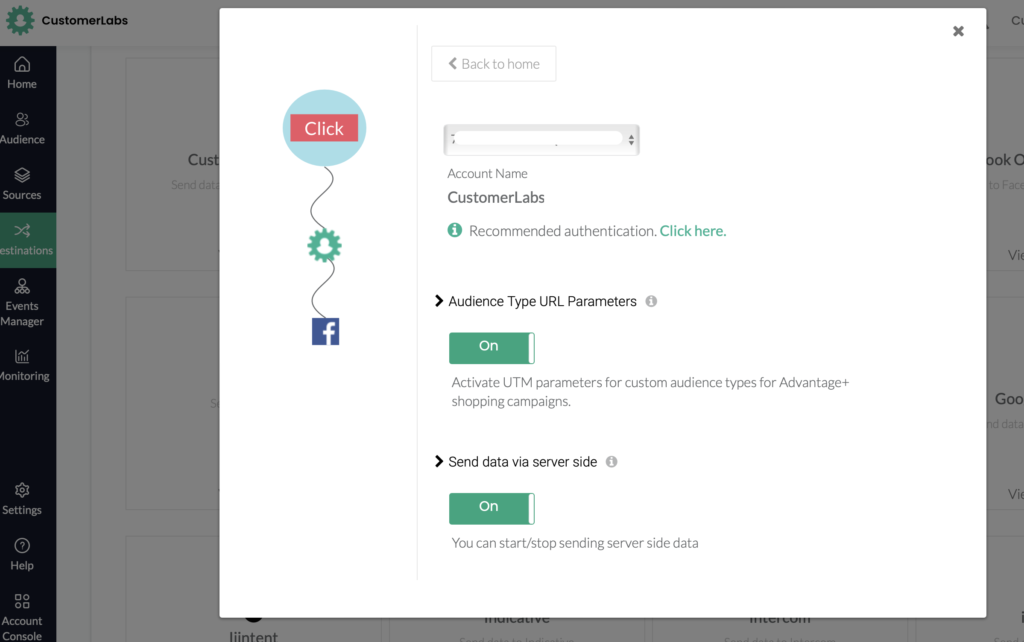
Doing this sends Meta two signals –
1. All your first-party data audience segments will be synced to Meta as a custom audience.
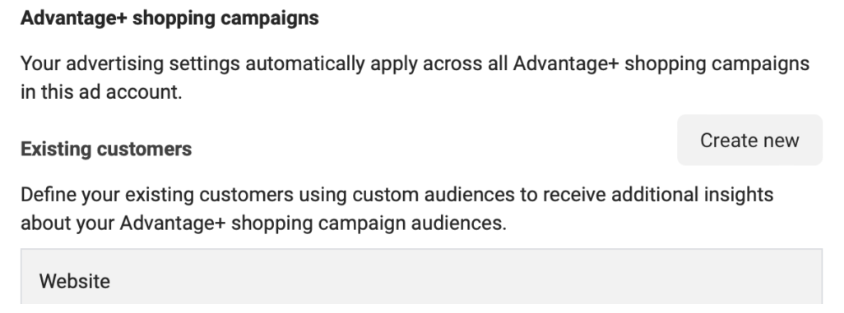
Meta’s algorithms will learn from the audience signals of this first-party data and train themselves on these data signals to find new prospects.
2. Your UTM parameters at the ad account level for the ASC are set as ‘new_audience’ for new customer value, and ‘first_party_audience’ for existing customer audiences who have interacted with your brand.
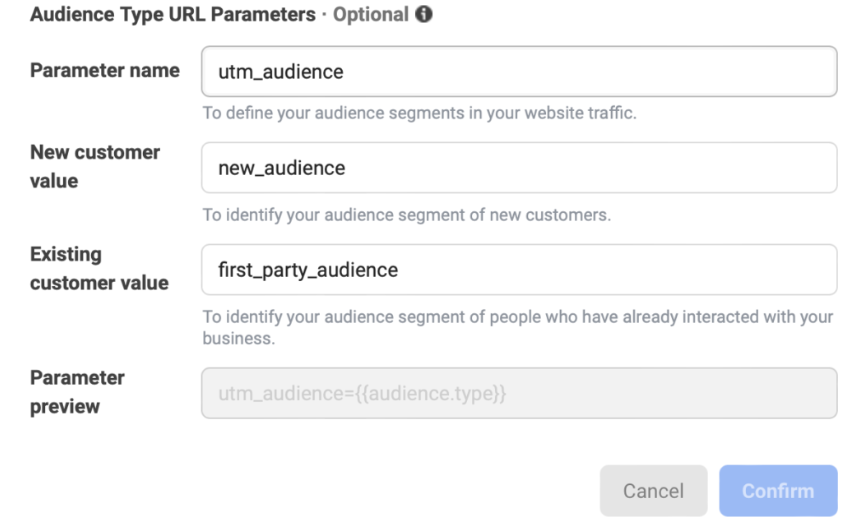
Having these UTM parameters will help in reporting and attributing the purchases correctly to new and existing first-party audiences separately.
Campaign Level Settings for Improving Conversions in ASC.
Once the audience is synced, start setting up the ASC campaign.
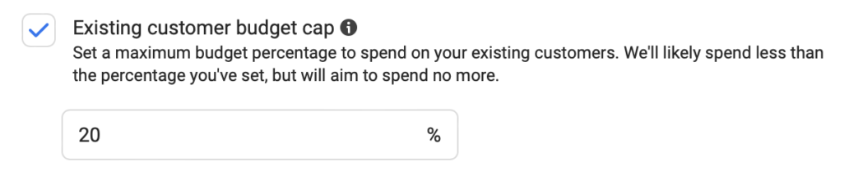
At the budget & schedule stage, cap the existing customer budget at 20%. This means 20% of your ad budget is spent on the middle of the funnel audience (first-party audience).
The next steps are similar to the standard campaign setup.
Use attractive ad creatives, compelling ad copies, and relevant landing pages in the subsequent stages.
Note: There’s no Ad and Ad set level for ASC. There are only two levels – campaign level and one level after that to add the ad creatives, landing page URL, etc.
We don’t need more theory; we need action. Here’s a brand that put these strategies into action and got real results.
Real-World Case Study: How MNMLST Improved ASC+ Conversions Using First-Party Data
Sometimes you need to see it to believe it.
MNMLST, a high-value luxury product brand, faced the same problem. The ad campaigns were underperforming because the standard purchase events weren’t giving Meta the right signals.
What are the Challenges the Brand faced?
MNMLST struggled with Shopify’s default CAPI because it gave weak signals. This made Meta’s algorithm less able to find high-value customers, which caused their ROAS to stay flat and ad spend to be less efficient.
What are the Actions taken by IPD Ops?
To fix these issues, MNMLST used CustomerLabs’ Advanced CAPI solution, which allowed them to:
- Custom Conversion Events track and segment actions by Average Order Value (AOV), product type, and customer group (like gender), so campaigns could be more precise.
- Enhanced Event Match Quality (EMQ) boosts the quality of signals by capturing more user actions and details, helping Meta better understand who’s engaging.
- Guide Meta’s algorithm with business-specific goals so it learns faster and optimizes campaigns for higher ROAS.
The Results they got
- Revenue growth increased to +117% overall.
- By retargeting, improve the conversion of high-intent shoppers, leading to more precise ad spend.
- Post-Purchase journeys result in more relevant follow-up campaigns that drive upsells and repeat purchases.
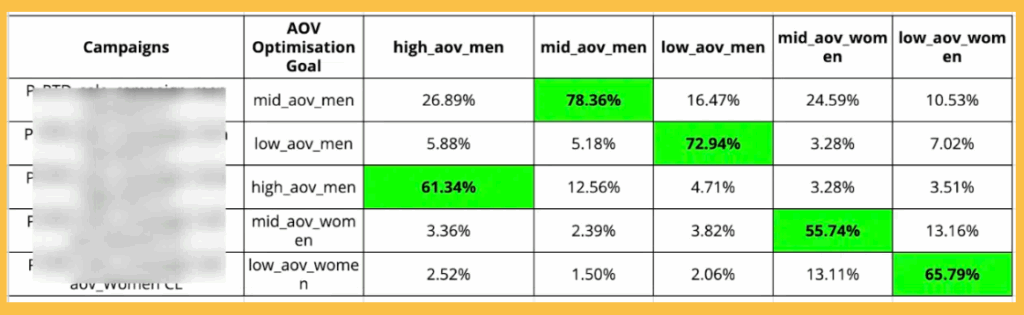
By training Meta’s algorithm with precise and high-quality signals, MNMLST optimized their advantage shopping campaigns the way Meta wants them. And they got the results they wanted, which increased sales, repeat orders, and upsells
This is proof that first-party data is a necessity, and it is the fuel that powers Meta’s AI algorithms to benefit from ASC+ campaigns.

Let’s look at a real number that shows the benchmarks.
Why are Industry Benchmarks important for ASC+ Campaigns?
Knowing the average numbers in your industry helps you see how your campaigns are doing and where you can do better.
Here’s a quick look at the main stats for Retail, Apparel, and D2C brands.
| Industry | Avg. Conversion Rate (CR) | Avg. CTR | Avg. CPC |
| Retail | 2.81% | 2.69% | $1.09 |
| Apparel | 2.15% | 2.15% | $1.01 |
| D2C | 2.81% | 2.69% | $1.09 |
What this means:
- CR (Conversion Rate): Out of 100 people who visit your site, 2–3 usually buy something.
- CTR (Click-Through Rate): About 2–3 people out of 100 who see your ad click on it.
- CPC (Cost Per Click): Each click costs around $1.
If your numbers are lower than these, your campaigns might need better targeting, ads, or tracking. Basically, it needs better signals to help ASC+ optimize.
Let’s look into the step-by-step playbook for improving ASC+ conversions.
Step-by-Step Playbook to Improve ASC+ Conversions
Step-by-Step Playbook to Improve Conversions in ASC+ Using First-Party Data. Follow these steps to make sure Meta has the right signals to optimize them properly.
A. Audit Your Data Signals
- Before you start, take a close look at the data you feed Meta.
- Make sure nothing is missing, like conversion events, and check that you don’t have duplicate or messy signals.
- Also, see if there are any gaps in tracking across devices or platforms.
Think of it like cleaning your desk. Meta can only work well if the data you provide is clear and organized.
B. Sync Server-Side 1P Data
- The best way to give Meta an accurate signal is by sending first-party data directly from your own server, not through a browser.
- Connect your website or CRM to share real-time actions like purchases or sign-ups, along with key details such as product type, transaction value, and customer profile.
- This process, known as server-side tracking, is a privacy-safe way to deliver reliable signals to Meta without relying on cookies or front-end scripts.
- It helps brands maintain data accuracy, improve event delivery speed, and strengthen attribution even after iOS and browser privacy updates.
- That means ASC+ learns from real customer actions instead of incomplete or missing data.
C. Set Up Event Quality Monitoring
- Once your signals are flowing to Meta, the next step is event quality monitoring.
- Making sure every action you send (purchase, add to cart, signup, etc.) is clean, accurate, and complete.
- Send your own customer data directly from your website or CRM to Meta.
- Make sure it includes signals like product purchased, order value, and customer type (new buyer, repeat purchaser, or high-value user)
- Meta’s ASC+ algorithm learns from the quality of your events. If the signals are incomplete, duplicated, or delayed, Meta can’t accurately find your most valuable customers.
- When your event data is accurate, ASC+ can quickly figure out who’s likely to buy and help your ads reach the right people.
D. Optimize Campaign Structure
- Segment by value: Split your audiences into High AOV buyers and Low AOV buyers (or casual shoppers). This lets ASC+ focus on the people who drive the most revenue.
- Clear naming conventions: Give your campaigns and ad sets simple, descriptive names so you can track performance easily.
- Test ads and placements: Experiment with creatives and placements, but keep the structure organized to avoid confusing the algorithm.
A strong, organized setup ensures ASC+ learns efficiently and optimizes for the right audience, maximizing your conversions.
What are the 12 Proven Best Practices to Boost ASC+ Performance?
Running ASC+ isn’t just about sending metadata; it’s about setting up, optimizing, and fine-tuning your campaigns so the algorithm can learn and convert better. From using first-party data to tracking performance and setting realistic ROAS goals, there are key steps that make a big difference.
To make it simple, here are 12 proven best practices to boost ASC+ performance, improve conversions, and get the most out of your ad spend.
- Avoid Traditional Campaign Structures
Treating ASC+ like standard campaigns can hinder performance. Embrace ASC+’s AI-driven approach for optimal results. - Leverage First-Party Data
Integrate your own customer data to provide Meta’s algorithms with accurate signals, enhancing targeting and conversion rates. - Implement Server-Side Tracking
Ensure reliable data transmission by setting up server-side tracking, reducing reliance on browser-based methods. - Utilize High-Impact Events
Focus on significant actions like purchases rather than less impactful ones to guide Meta’s optimization effectively. - Segment Audiences by Value
Categorize customers into segments such as high-value purchasers and casual browsers to tailor your campaigns. - Set Realistic ROAS Goals
Establish achievable Return on Ad Spend targets to align expectations and measure campaign success accurately. - Optimize for New Customer Acquisition
Prioritize strategies that attract new customers, expanding your brand’s reach and potential customer base. - Enhance Creative Assets
Regularly update and test creative materials to maintain audience engagement and ad relevance. - Monitor and Adjust Budgets Dynamically
Allocate budgets flexibly based on performance metrics to maximize return on investment. - Implement Advanced Matching Techniques
Use advanced matching to improve data accuracy and ad targeting precision. - Regularly Review Campaign Performance
Consistently analyze campaign data to identify areas for improvement and optimize strategies accordingly. - Stay Updated with Meta’s Algorithm Changes
Keep abreast of updates to Meta’s algorithms to adapt your campaigns and maintain optimal performance.
There is a standalone blog that completely explains only about best 12 practices to boost ASC+ performance. Along with these best practices, there are advanced pro tips that may help you elevate your ad campaign performance.
What are the Advanced Pro Tips to Elevate ASC+ Campaign Performance?
Once your basic ASC+ setup is solid, you can level up with these advanced strategies:
- Predictive Audiences: Use first-party data to identify people who are most likely to buy even before they take action. This lets ASC+ target high-value prospects instead of guessing.
- Real-Time Event Validation: Make sure every conversion event is accurate as it happens. Clean, reliable signals help Meta optimize campaigns faster and smarter.
- Closed-Loop Reporting: Connect your ASC+ campaigns with your analytics to track which ads actually drive revenue. This gives you a full view of ROI and helps fine-tune your strategy.
These advanced steps don’t just feed data to Meta; they make your campaigns smarter, faster, and more efficient. Tools like 1PD Ops make all of this easy, from syncing first-party data to validating events in real time.
These advanced steps don’t just feed data to Meta; they make your campaigns smarter, faster, and more efficient.
Let’s conclude.
Conclusion
At the end of the day, ASC+ campaigns only perform as well as the data you feed them.
Brands that cleaned up their conversion events, leveraged first-party data, and structured their campaigns properly saw 2–4x improvements in conversions and significantly lower CPAs(Cost per Acquisition).
If your campaigns are struggling, it’s not about spending more; it’s about feeding Meta the right, high-quality signals. Audit your data, segment your audiences, and start sending rich first-party events to get this right. We provide a 14-day free trial to experience the high ASC+. Book a demo today.