Let’s skip the preamble that every other blog does, the one that says, “In today’s evolving privacy landscape…” and then proceeds to explain what a cookie is for five paragraphs.
For the product setup, see first-party data ops.
| You already know cookies are dying. You already know iOS 14.5 wrecked your Facebook attribution. You already know your Google Ads conversion data looks like it was estimated by someone who also believes in astrology. |
|---|
What you don’t know or what nobody has been straight with you about is which ad tech tools actually solve this, and which ones are just enterprise slide decks dressed up as software.
This blog is that straight talk.
We’re going to break down every major category of first-party data tracking tools in ad tech, explain who they’re actually built for, and make the case, plainly and without apology, that CustomerLabs is the best adtech tool you should be using if you’re a performance marketer, growth lead, or the person who actually has to make the ads work.
If you want to skip the gyan and get to the good part, click here
First-Party Data Tracking: What It Actually Means (30-Second Version)
First-party data is information your users give to you, directly through form fills, purchases, sign-ups, app usage, or website behavior. You own it. You collected it.
Nobody can take it away with a browser update.
First-party data tracking is the infrastructure that captures that data, structures it, and makes it usable, especially for ad platforms like Meta, Google, LinkedIn, etc., that need clean, matched signals to optimize and attribute correctly.
| The goal isn’t to hoard data in a warehouse. The goal is to activate that data, to push it to your ad platforms |
|---|
So the ad platform can find more people like your best customers, suppress the ones who have already converted, and stop wasting ad spend on the ones who never will.
That’s the game. Now let’s talk about who’s playing it.

The Ad Tech Landscape: A Guided Tour of “Built for Someone Else”
Here’s an honest map of the major tools dominating the conversation around first-party data in ad tech.
| Spoiler: Most of the ad tech tools in the market were built for a company with 20 engineers and a $2M data budget. Not for you. |
|---|
Segment: The Developer’s Darling
Segment is a Customer Data Platform (CDP) that routes event data from your product and website into a hundred different destinations. It’s genuinely impressive engineering.
Who it’s actually for:
Product engineering teams who want a single event pipeline for analytics, data warehouses, marketing tools, and internal systems.
The problem:
If you’re a performance marketer trying to sync your first-party customer list to Meta CAPI or Google Ads, Segment will get you there, eventually, after your engineering team dedicates a sprint to it.
Setup takes weeks, not days. Every destination integration requires configuration. Want to push suppression audiences? That’s a developer task. Need to update your seed audiences for lookalikes? Back to the ticket queue.
| Segment is excellent at what it does. It just doesn’t do what you need. It’s a data infrastructure tool, not an ad activation tool. |
|---|
Adobe Real-Time CDP: The Enterprise Boardroom Favorite
Adobe’s Real-Time CDP is what gets demoed in QBRs to justify six-figure contracts. It integrates beautifully with Adobe Analytics, Adobe Target, and every other piece of the Adobe Experience Cloud you’ve already bought.
Who it’s actually for:
Large enterprises with a dedicated martech stack, a data engineering team, and an Adobe rep they’re on a first-name basis with.
The setup reality:
3 to 6 months for full implementation. Don’t even get me started on the pricing. Requires professional services to configure.
| If you’re a D2C brand doing $10M/year in revenue, Adobe Real-Time CDP is like hiring a private jet to commute to work. |
|---|
And let’s be honest, the “Real-Time” in the name is doing a lot of heavy lifting.
Salesforce Data Cloud: The CRM That Wants to Be Everything
Salesforce built Data Cloud (formerly Genie) to be the connection between your CRM and your marketing activation layer.
If your entire business runs on Salesforce like Sales Cloud, Marketing Cloud, Service Cloud, then Data Cloud is worth evaluating.
Who it’s actually for:
Enterprise companies already paying Salesforce $500K+/year who want to consolidate vendors.
The reality check:
If you’re not already deep in the Salesforce ecosystem, Data Cloud doesn’t make sense as an entry point for first-party data tracking.
| It’s a retention play for existing customers, not a solution for performance marketers who need clean first-party signals flowing into their ad campaigns. |
|---|
LiveRamp: The Identity Resolution Specialist
LiveRamp is genuinely powerful at what it does: identity resolution, data clean rooms, and connecting anonymized data across ecosystems.
If you need to match your offline CRM data to online audiences at scale, with privacy-safe infrastructure, LiveRamp is the conversation to have.
Who it’s actually for:
Enterprises with large offline datasets, media agencies managing massive programmatic spends, and brands running connected TV campaigns.
The pricing reality:
Starts at $50K/year. Realistically $100K+ for meaningful usage. The target customer is a brand spending millions per year on media.
| For the performance marketer managing $30K-$50K/month in ad spend trying to get server-side events flowing to Meta, LiveRamp is a sledgehammer for a finishing nail. |
|---|

What’s The Pattern You Should Notice
Here’s again a small task for you.
After you have read the previous section about all the other so-called adtech tools in the market, what is the pattern that you can find among them?
Every single enterprise tool above has something in common: they were built for data teams, not for the people running ads.
They require engineering resources to implement. They take months to go live. They optimize for data infrastructure, not ad platform activation.
And they price accordingly, which means if you’re a growth-stage brand, a D2C business, or a mid-market company, you’re either overpaying massively or you’re cobbling together workarounds.
This is not a knock on those tools. They’re excellent for their audience.
The knock is on the industry narrative that presents them as the default answer to “how do I fix my first-party data problem”.
When your first-party data problem is, specifically, that your Meta ROAS is tanking and your Google Ads attribution is off.
What Performance Marketers Actually Need from a First-Party Data Tool?
Let’s get specific.
| If you’re a performance marketer, growth lead, or founder managing ad spend, here’s what your actual checklist looks like: |
|---|
1. Server-Side Event Tracking
You need events such as purchases, AOV purchases, new purchases, repeat purchases, subscription sign-ups, page views, add-to-carts sent from your server directly to Meta CAPI, Google Ads, and other platforms.
Not relying on browser pixels. Not subject to ad blockers or iOS restrictions.
2. Customer List Sync to Ad Platforms
You need to push hashed PII that is your customer emails and phone numbers directly to Meta Custom Audiences, Google Customer Match, and LinkedIn Matched Audiences automatically, not manually uploading CSVs every Monday morning.
3. Suppression Audiences
You need to stop showing ads to people who already bought. Or who churned six months ago and aren’t coming back. Or your current paid subscribers.
Audience Suppression is where ad spend goes to not getting wasted.
4. Lookalike Seed Audiences
Your best customers are a signal. You need to push clean, high-LTV customer segments to Meta and Google so their algorithms can find more people who look like them. Garbage in, garbage lookalikes out.
5. No Engineering Bottleneck
Every time a marketer has to file a ticket for their data tool, a fairy dies. You need something your team can operate, configure, update, and troubleshoot; without pulling engineers off product work.
6. Fast Time-to-Value
The pixel is broken today. Your ad performance is bleeding today. You need something to live in days, not months.
7. Transparent Pricing
You need to know what you’re paying before you talk to a sales rep for four weeks.
| Take a second. And ask this question that you should ask: Does any of the enterprise stack above check all seven boxes? |
|---|
I guess. They didn’t tick all the boxes. Well, I can help you fix that. Because I know a tool which is built for the people who actually run ads.

What is the Best Adtech Tool Built for Performance Marketers?
| CustomerLabs 1PD Ops is the best adtech tool built for performance marketers. Not for data engineers.Not for enterprise IT teams.For the people who actually have to hit the numbers. |
|---|
Built for a performance marketer who hates fidgeting with the code (like me😅),
-
who wants integrations to be done, connecting Meta, Google, TikTok and what not
-
Send data to multiple destinations
-
Bring data from multiple sources in real time.
-
And without the entire developers team.
Yes, that is possible. CustomerLabs is built to make the performance marketers life easy.
Let me tell what all you can do with CustomerLabs to bring better conversions out of your campaigns (probably that will be your ultimate goal behind all the search)
CustomerLabs fixes the exact problems performance marketers face when pixels break, attribution gets messy, and ad platforms start optimizing on incomplete data.
Here’s what you can actually do with CustomerLabs.
What CustomerLabs Solves for Performance Marketers?
Let’s just get into it.
1. Server-Side Tracking & 1P Domain Tracking , Your Signal, Fully Yours
CustomerLabs sends your events , purchases, sign-ups, add-to-carts, whatever matters , directly from your server to Meta CAPI, Google Ads Enhanced Conversions, LinkedIn, TikTok. The browser can’t touch it.
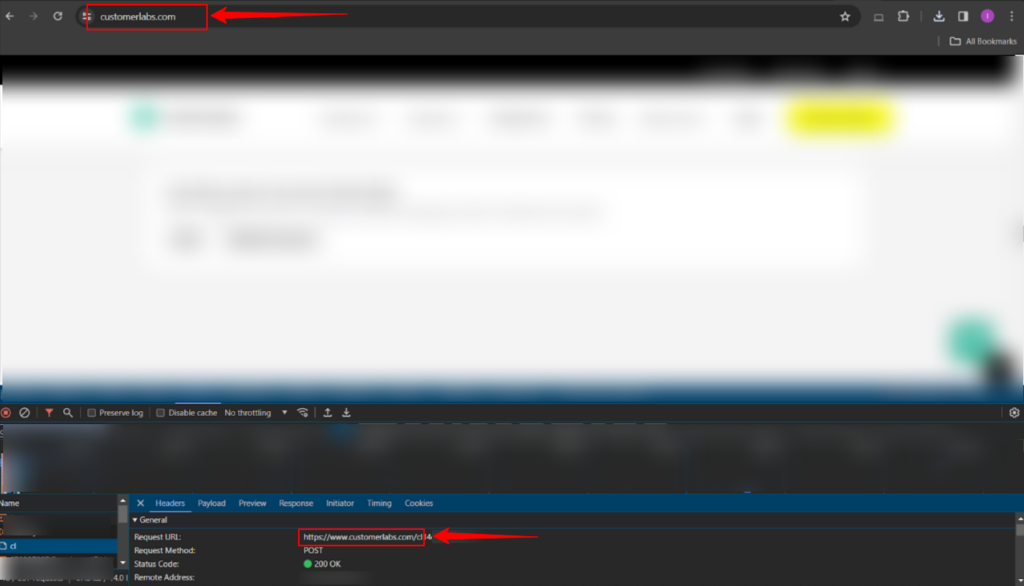
Here’s what most other platforms miss: 1P domain tracking. CustomerLabs fires tracking under your domain, not a third-party domain.
| So when a user visits your site, the tracking cookie is set by you , which means browsers trust it, ITP doesn’t kill it, and your attribution window doesn’t quietly shrink to 24 hours without telling you. |
|---|
What you actually see: Meta Event Match Quality score goes up. Google conversion rates stop looking like astrology estimates. Your campaign optimization starts working because platforms finally have real signal , consistently.
2. Identity Resolution - Stop Tracking Sessions, Start Tracking People
Here’s the dirty secret of most ad tracking setups: they track sessions, not people. User visits on mobile, then converts on desktop two days later , that’s two anonymous sessions in your data with no connection between them.
CustomerLabs resolves identity across devices, sessions, and touchpoints. It stitches together the anonymous visitor, the known email, the phone number from checkout , into a single unified customer profile.
Why this matters for your ads:
When you push a Custom Audience to Meta, you’re pushing matched people, not fragmented sessions. Targeting gets more precise.
You stop paying to show ads to the same person three times because your data thinks they’re three different users.
| Better identity resolution = better match rates = platforms spending your budget on the right humans. |
|---|
3. Custom Events & Signal Engineering , Tell the Platforms What Actually Matters
Standard pixel events are blunt instruments. “Purchase.” “Page view.” “Add to cart.” That’s all the platform sees, and it optimizes accordingly , which means it finds people who might click “add to cart,” not people who spend $200+ and come back three times.
CustomerLabs lets you define custom events that reflect your actual business logic.
A “high-value purchase” event that only fires above a certain AOV. A “repeat buyer” event that triggers on the third transaction. A “trial-to-paid conversion” event that’s specific to your SaaS funnel.
This is signal engineering , you’re not just sending data, you’re sending meaning. You’re telling Meta and Google: this is what a good conversion looks like for us. Optimize for this.
you’re not just sending data, you’re sending meaning. As customer journeys become more complex, marketers are also developing stronger data analysis and interpretation skills to better understand how customer behavior translates into campaign performance.
The result: platform algorithms stop finding people who look like your worst customers and start finding people who look like your best ones.
That’s not a targeting change. That’s a data quality change. And it compounds every single week.
4. Segmentation , Build the Audiences Your Ad Platforms Can’t Build Themselves
Your ad platform’s native segmentation is surface-level. “People who visited your website.” “People who purchased in the last 30 days.” That’s it.

CustomerLabs lets you build segments on behavioral logic that actually reflects how your customers behave. High-LTV customers above a spend threshold. Repeat buyers with 3+ orders. Trial users who hit a specific activation event but haven’t converted. Subscribers who are showing churn signals.
These segments sync automatically , to Meta Custom Audiences, Google Customer Match, LinkedIn Matched Audiences. Always fresh. No CSV. No manual export.
And the same segmentation logic powers your suppression audiences: recent purchasers, current subscribers, churned users you’ve written off.
You stop showing ads to people who have already converted. Your effective CPA drops , not because targeting got smarter, but because you stopped paying for customers you already have.
Better seeds for lookalikes too. Feed Meta your high-LTV segment as a seed, not your entire customer list.
| Tighter lookalikes → lower CPAs → more budget doing actual work. |
|---|
Most ad accounts aren’t pulling this lever because their data setup won’t let them build segments this specific. Now yours does.
5. Data Activation , All of This, Actually Connected to Your Ad Platforms
Here’s where it all comes together. Having clean data in a warehouse does nothing for your ROAS.
Data activation is the last mile, getting that data into the hands of Meta, Google, LinkedIn, TikTok (including offline conversions) so they can actually use it to optimize your campaigns.
CustomerLabs is built for activation, not storage. Pre-built connectors to every major ad platform.
Native integrations with Shopify, WooCommerce, BigCommerce, Clickfunnels and custom sources via API. Events flow in real time. Audiences sync on schedule. Suppression lists update automatically.
6. No Engineering Bottleneck , Actually
Not “no-code” as in a developer spent three weeks building you a template. No-code as in you, the marketer, configure it, manage it, and update it without filing a single ticket.
| Every time you need to update a suppression list, refresh a seed audience, or add a new custom event , that’s a workflow change, not a sprint. |
|---|
That speed compounds. Over a quarter, the team that can iterate on their data setup weekly will outperform the team waiting on engineering every single time.
Your data velocity is now your competitive advantage, not your bottleneck.
7. Live in Days, Not a Six-Month Implementation Project
Enterprise tools quote 3–6 month timelines because they’re building data infrastructure. Warehouses, pipelines, schemas.
CustomerLabs is built to do one thing fast: get clean first-party signals flowing into your ad platforms.
Most teams are live within a week. Some within days depending on how complex your data sources are.
Your pixel is broken today. Your campaigns are optimizing on bad data today. Every week you delay is a week of ad spend going into a platform running on guesswork.
Time-to-value here isn’t a nice-to-have , it’s the difference between fixing this quarter and writing off the year.
8. Pricing That Doesn’t Require a Board Deck to Justify
No six-figure minimums. No “contact us for pricing” theater that wastes three weeks of your life. No procurement process. No surprise professional services fees.
Built for teams spending $30K–$100K/month on ads who need infrastructure that punches above its weight , not for enterprises where a $200K contract is a line item nobody questions.
Checkout CustomerLabs pricing here
The ROI math is not complicated: better signal quality → better platform optimization → better campaign performance. The only question is how long you want to wait before you fix it.
Fixes the input , the tracking, the identity, the signal quality, the segmentation, the activation , so your ad platforms stop guessing and start actually working. That’s the whole game.
That’s CustomerLabs. That’s the whole argument.
Don’t trust me, then try CustomerLabs free for 14 days and set up your first-party data tracking, set your campaign with 1P data.
If you still want to figure out strategies? Don’t worry, 1PD Ops experts can help you out with the entire process of figuring out.