The D2C Dilemma
If you’ve spent even a week in the D2C world, you’ve probably heard this:
“We want to scale our campaigns to get more new customers!”
And right after that comes the familiar obsession nCAC (new Customer Acquisition Cost).
But here’s the question:
Are brands really tracking, reporting, and optimizing for new customers at the ad platform level be it Meta, Google, or TikTok?
Most aren’t.
But Smars, India’s leading jewelry brand, did it differently when others were thinking about it.
The Challenge of Smars
Smars wanted to optimize ad campaigns for new customer purchases, not just total sales.
While most brands were still experimenting, Smars was already running tests, asking questions others hadn’t even thought of yet.
And here’s where our story begins with their ex – CAPI partner.
Conversation between Brand and ex – CAPI partner Shopify – The Real Story of D2C Brand

The Reality Check
The truth is no platform (Shopify, Meta, or Google) will help you truly track new customers out of the box.
It’s not that Shopify is bad. It’s just not built for this use case.
Shopify builds websites; performance marketers build signals.
And that’s where Signal Engineering comes in.
What Is Signal Engineering?
Signal Engineering is the process of choosing and sending the most valuable customer actions (first-party data) to ad platforms teaching their algorithms what success looks like for your business.
In simple words, it’s about defining your own custom events like new customer purchase, repeat customer purchase, necklace purchase, prepaid purchase, high order value purchase etc.
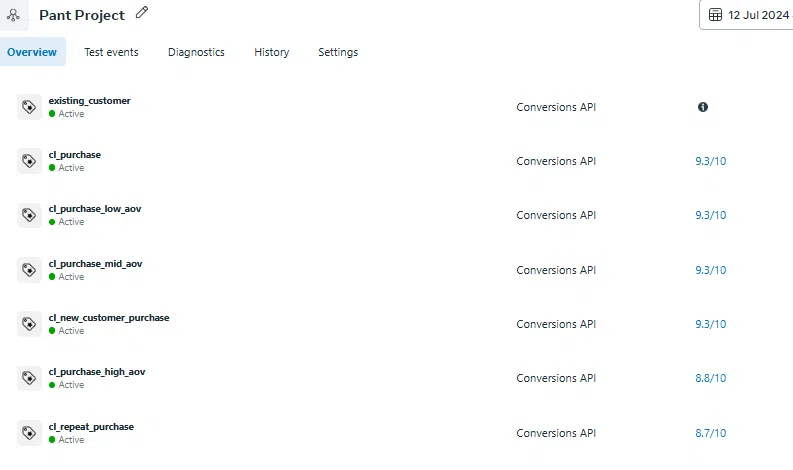
Every business has different success signals, and by sending those to Meta or Google, you help the algorithm learn what really matters.
Here is Smars journey ditching Shopify CAPI and adopting to Signal Engineering and First-Party Data Ops.
Smars’ Signal Engineering Journey
Smars began by powering the entire funnel with first-party data signals from CustomerLabs.
Step 1: Disconnect/Ditch the Shopify CAPI
They unplugged the default Meta Shopify CAPI and replaced it with first-party data pipeline from CustomerLabs.

Within just 7–14 days, Cost Per Purchase (CPP) dropped by 14% — purely by fixing the quality of signals being sent to Meta.

Step 2: Signal engineering – Build Custom Events
Smars’ next move was to go beyond “purchase” events and build a full set of custom signals; this is where true Signal Engineering happened.
We created:
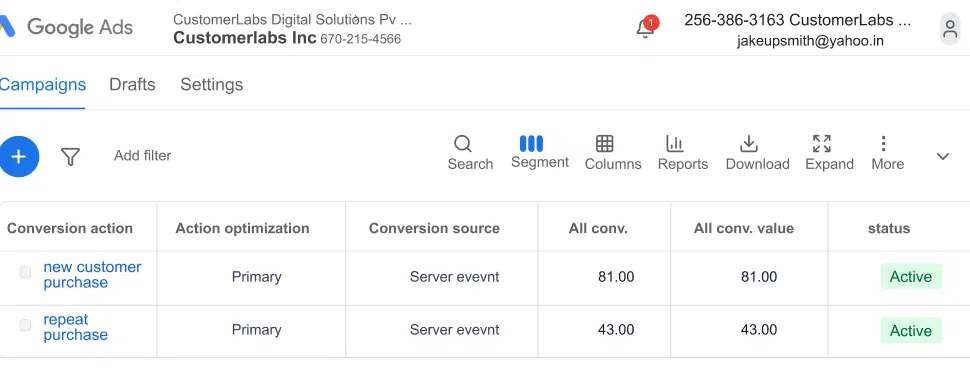
- High-AOV, Mid-AOV, and Low-AOV purchase events
- New Customer and Repeat Customer purchase events
- Mapped these events to campaigns on both Meta and Google Ads
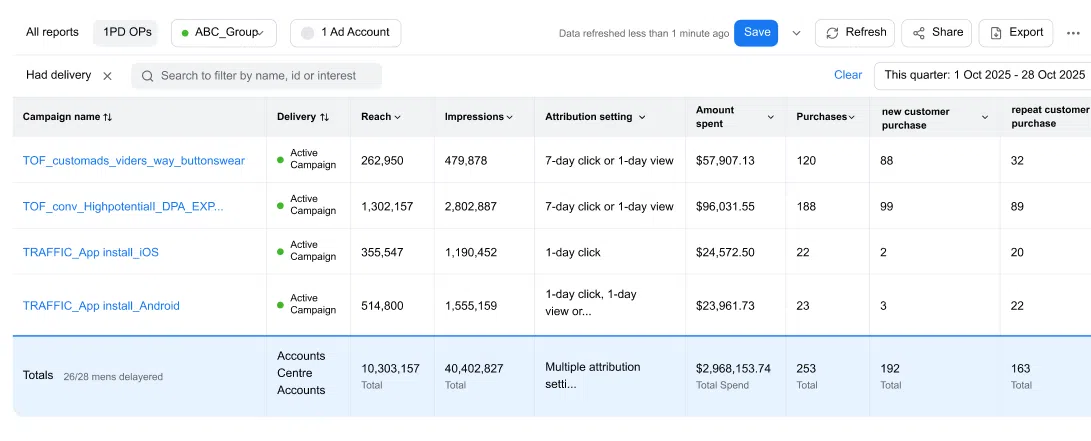
This helped us review the performance of the campaigns on which is delivering highest new, repeat, high AOVs, low AOVs etc.
Step 3: Set Campaigns to Scale New Customers
Here’s how Smars configured their Meta campaign:
- Pick a Catalog – Picked the hero products that already attract new buyers.
- Set the Conversion Goal – Choose New Customer Purchase as the campaign objective.
- Define the audiences in advertising settings –
Add all the appropriate audiences to those segments. Existing customers are just your customer list, engaged audience is your website visitor audiences you have and below build those UTMs to track them inside the CustomerLabs platform for further analysis.
In CustomerLabs these audiences can be synced realtime and refresh them in frequent intervals without any hassle of export and import.

- Exclude Existing Audiences –
Once the audiences are defined, added all existing customers, engaged users, and website visitors to the exclusion list. That way, Meta focuses only on new customers.
The Results
After a 7–14 day run:
- 247 total conversions
- 212 (≈86%) were new customers

That’s what happens when your campaigns are powered by first-party data and smart signal engineering. The campaign delivers for the desired goal.
Key Takeaway
No Shopify, no Meta, no TikTok setup can automatically track new customers.
You need Signal Engineering powered by first-party data to make your ad algorithms smarter.
Smars didn’t just scale their campaigns. They redefined what “optimization” means for D2C growth.
By sending high-quality signals to Meta and Google, Smars:
- Reduced CPP by 14%
- Improved campaign efficiency
- Optimized the campaign to bring 86% only new customers.
- And finally, trained the algorithm to spend smart, not hard.