Still getting confused about which audience segmentation tool to pick, because there are so many tools in the market.
That’s the exact reason that I planned to write this blog: to make things easy for you. Because I can feel the pain behind your search. T have done my research with a wider lens and have brought different perspectives that might help you make a wise decision.
In my list, I have the top 4 audience segmentation tools, and let’s dig deeper into each and compare them to find out the most effective one for you.
Let’s gooo..
What Makes a Good Audience Segmentation Tool?
A good Audience Segmentation tool never relies heavily on static attributes such as location, device, or lead status, and remains massively generic. These signals are useful, but they rarely explain why a user behaves a certain way. A good audience segmentation should be able to describe what the user is doing or why it matters. And the qualities are;
-
Handles first-party data
-
Real-Time & Dynamic Segmentation
-
Multi-Source Data Unification
-
Behavioral & Intent-Driven Signals
-
Cross-Channel Activation
-
Scalability & Performance
-
Attribution & Outcome Measurement
-
Privacy & Compliance-First
These will help you with the audience segmentation towards conversion mapping
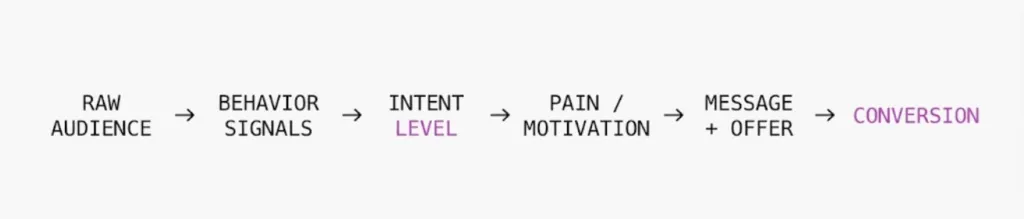
Coming back again, think I’m gonna share what the benefits will you get by doing audience segmentation
Now moving forward, let’s compare what are the parameters that make the best audience segmentation tool work flawlessly for personalization.
A Comparison of Audience Segmentation Tools
Let’s make a quick comparison.
| Criteria | CustomerLabs | HubSpot | Hotjar | Klaviyo |
|---|---|---|---|---|
| Behavioral segmentation | Advanced (event + revenue based) | Limited | Qualitative | Basic |
| Revenue-based segments (AOV, LTV) | Native | No | No | Partial |
| Funnel-stage segmentation | Yes | Sales-centric | No | Email-centric |
| Anonymous - known user stitching | Yes | Partial | No | Partial |
| Event deduplication & enrichment | Yes | No | No | No |
| Setup time | Hours | Weeks | Minutes | Days |
| Dependency on the dev team | No | High | Low | Medium |
| Direct impact on ad ROAS | High | Indirect | None | Indirect |
| Attribution improvement | Yes | Partial | No | Partial |
| Pricing | $99/month | $73/month | $49/month | $140/month |
Folks, as we look at the comparison now, you can see evidently that CustomerLabs holds more features than others. Let’s see these tools’ (Hotjar, Hubspot, Klaviyo) performance and limitations.
Best Tools for Audience Segmentation
CustomerLabs 1PD Ops
CustomerLabs enables advanced audience segmentation by turning raw first-party data (1PD) into real time audience.
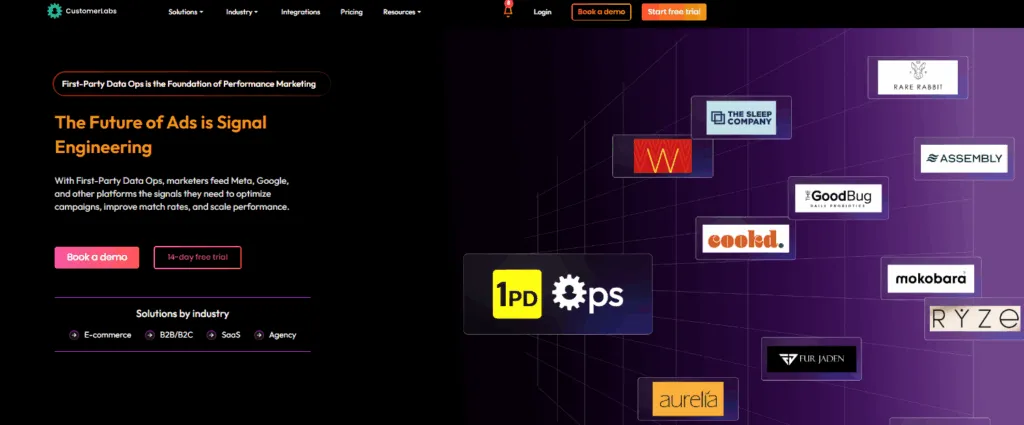
It helps the performance marketer to understand their audience by turning everyday user actions like page views, clicks, and purchases into clear, usable audience groups.
(There is a hidden secret no one knows, but I tell only you because it’s personal)
Aka The Personnel Secret:
Nucleus Audience Builder in CustomerLabs’ core audience segmentation engine is a powerful tool that helps marketers build personalized audience segments using first-party behavioral data.
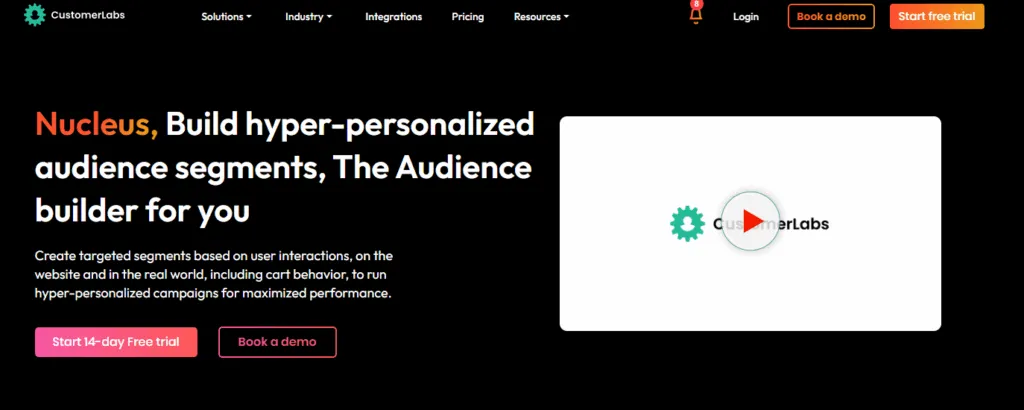
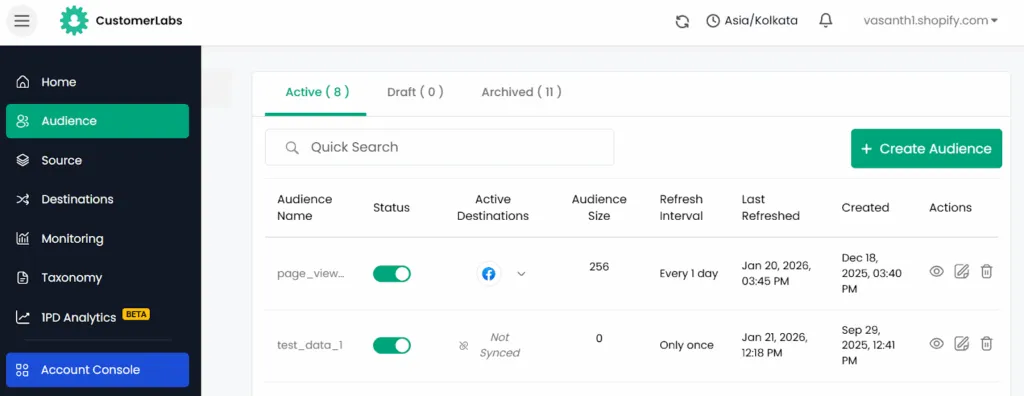
Unlike simple lists or demographic filters, Nucleus lets performance marketers to create deep segments based on actual user behavior across website and real-world interactions, then use those segments to run personalized campaigns with better performance. Also, as a bonus point, CustomerLabs even activates your data by sending it back into the ad platforms like Meta & Google.
And more importantly, you are not only into audience segmentation with CustomerLabs.
CustomerLabs is flexible across channels like emails, ads, analytics, and personalization. And this audience segmentation becomes:
-
Behavior-driven - Segments are built using events such as page views, form submissions, product usage, and campaign interactions.
-
Real-time and dynamic - Audiences update instantly as users take action, ensuring messaging always matches intent.
-
Cross-channel ready - The same segment can power ad platforms, email tools, analytics, and personalization engines.
-
Privacy-first and future-proof - Built on first-party data, CustomerLabs ensures segmentation remains effective even as cookies phase out.
By going through the comparison, I hope you got some bit of clarity about the features, price, use cases, and which piece fits in the right puzzle.
Honestly, from my POV, I think you should pick CustomerLabs.
Customerlabs is specialized and unique in its key features, like owning your first-party data without any assistance, no fancy dashboard, no complex tech things, just real numbers. Yes, “BY YOURSELF,” you can track your domain via 1P domain tracking and collect compliant data of the users who visited your website. This allows you to collect data and keep it alive for the long term - “The Lifetime Cookie.”
Fascinating, isn’t it?
And that’s not all. The data we collect is unified through advanced identity resolution and seamlessly sent via CAPI to ad platforms without data loss.
If you’re a health and wellness brand and have no compromise in privacy & compliance, no worries. Your data is collected responsibly, carefully scrubbed, and securely shared with platforms like Meta or Google without triggering healthcare compliance issues. We ensure to regulations such as HIPAA, GDPR, CCPA, and DPDPA, so you can scale confidently and compliantly.
Honestly, if I were in your place now, I’d go with CustomerLabs because with these multiple features and benefits, why should I own a tool that performs only one action?
It’s really a bullsh*t..!
So, it seems CustomerLabs will be a specific true audience segmentation and activation platform that provides what you are looking for, not only that. You’ll get all that you need for your campaign, not what you wanted. Somewhat compared to Hotjar, Klaviyo, and Hubspot. The price may be a bit high, but I’m not ready to invest in the cheapest tool to get a limited performance.
If it performs the need (audience segmentation), that’s all I wanted for my business goal. That’s it.
Additionally, there are 4 tips to leverage first-party data to enhance audience segmentation. They are,
-
Centralize data
-
Leverage behavioral insights
-
Creating dynamic audience segments
-
Build lookalike audiences
(P.S - If you need an easy, simple setup for audience segmentation settings, get free guidance without any developer support.)

Hubspot
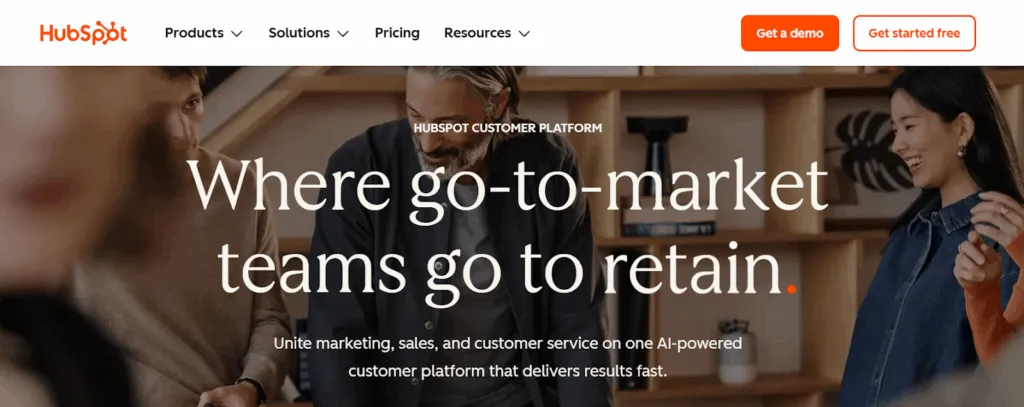
HubSpot is a CRM-based platform that stores and organizes customer data in one place. This makes it easy to group people into the right audiences and use that data for marketing and sales.
Also, HubSpot helps teams segment users based on their stage in the buying journey, how they interact with emails, forms, deals, and sales teams.
The limitations of Hupspot in audience segmentation & activation
While HubSpot is great for CRM-based audience segmentation, it has some limitations for real-time marketing activation.
-
It is not designed to track high-volume user actions in real time,
-
Audience updates to ad platforms are slow,
-
It has a limited ability to segment anonymous visitors.
HubSpot also cannot send strong real-time intent signals to ad platforms to help optimize campaigns. Because of this, HubSpot works best when used alongside first-party tracking tools that handle real-time data and ad optimization, while HubSpot remains the system for managing audience quality and lifecycle stages.
Klaviyo
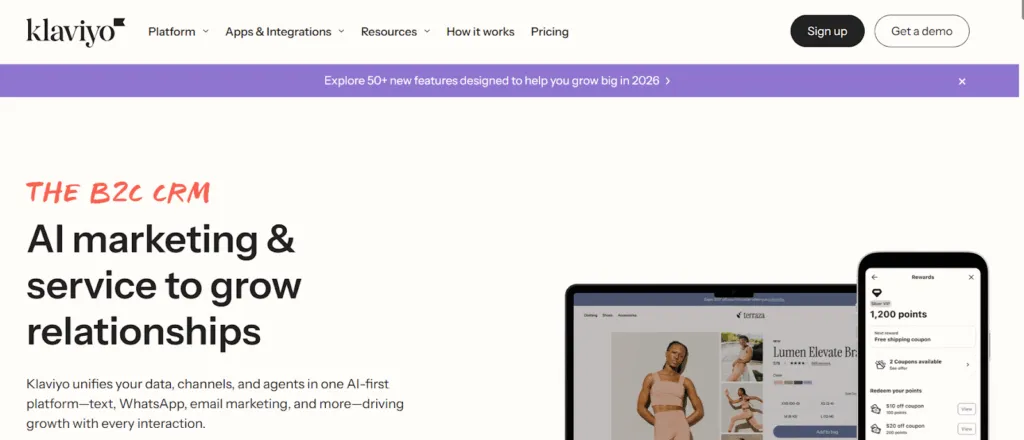
Klaviyo is a data-driven marketing automation platform built primarily for B2C and eCommerce audience segmentation. Its core strength is real-time behavioral segmentation, allowing marketers to create high audience based on events such as
-
Product view,
-
Add-to-cart
-
Purchase
-
Browsing frequency,
-
Order value,
-
Engagement across email and SMS.
Key features also include;
-
Event-based tracking
-
Predictive analytics
-
Automation flows
Limitations of Klaviyo for audience segmentation
Klaviyo works really well for eCommerce brands, especially for email and SMS marketing, even though it’s good at behavioral segmentation. Klaviyo has limitations outside the eCommerce - focused ecosystem.
-
It’s not the best fit for the B2B businesses with long sales cycles that rely heavily on CRM - based lead qualification.
-
It offers less depth when it comes to sending strong first-party data or server-side signals to ad platforms.
-
It depends on a high volume of events, which can sometimes create a less accurate audience segmentation.
-
Still need additional platforms for advanced ad optimization, complex CRM workflows, or strict data compliance.
Hotjar
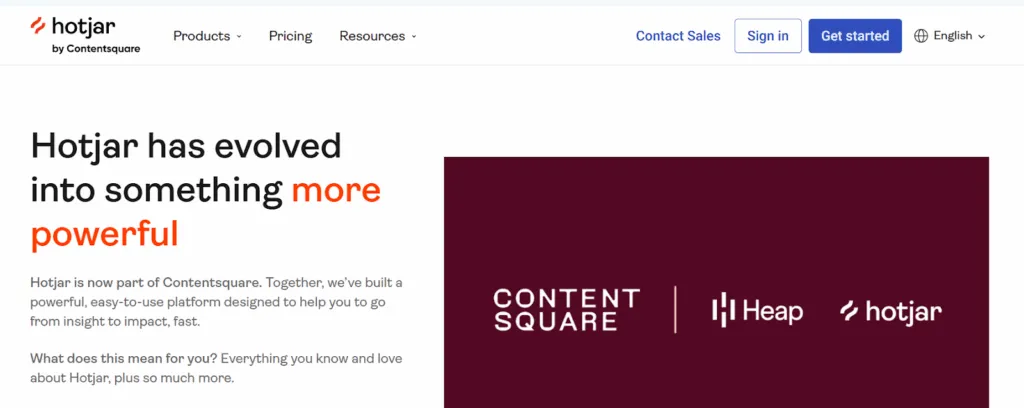
Hotjar helps to understand how people behave on a website. It shows what users actually do like, where they click, how far they scroll, where they get stuck, or where they leave, using tools like heatmaps, session recordings, and on-site feedback.
This makes it easier to spot problems, confusion, or drop-off points in the user journey. While Hotjar doesn’t send audiences to ad platforms or run campaigns, it’s very useful for shaping audience strategy.
Hotjar helps marketers decide what behaviors should be tracked and used later for audience segmentation in other marketing tools.
However, its excellence in UX analysis, like heatmaps & recordings, user feedback directly on your site, and identifying friction and usability issues, still lacks in audience segmentation. Let’s learn the limitations of Hotjar.
Limitations of Hotjar for audience segmentation
Hotjar isn’t built for audience segmentation in the usual marketing sense. It doesn’t create audiences you can export, send data to ad platforms, or trigger real-time campaigns.
Let me list it down,
-
Session-Based Rather Than User-Based
-
Limited Behavioral Segmentation
-
No True Real-Time Segmentation
-
Limited Cross-Device Tracking
-
No Funnel-Based Segmentation
Let’s look into some strategies that no one else will tell you about, how effective your campaign and ROAS peak.
Strategies to Create a Powerful Audience Segmentation.
There are 6 Most Common Types of Audience Segmentation for E-commerce, they are;
-
Demographic Segmentation: Know Who You’re Talking To
-
Geographic Segmentation: Location Drives Relevance
-
Behavioral Segmentation: Actions Speak Louder Than Demographics
-
Psychographic Segmentation: Understand the Why
-
Lifecycle or RFM Segmentation: Treat Every Customer Differently
-
Technographic & Channel Segmentation: Meet Them Where They Are
For more information, click the above link that is interlinked at the top of this section and be a unique performance marketer that stands out from the crowd.
Conclusion
As we have seen in the comparison above, not all tools serve the same purpose. Let’s take Hotjar, which excels in UX insight, and HubSpot, which is strong for CRM based segmentation, and Klaviyo, which focus in eCommerce email & SMS segmentation. But CustomerLabs, on the other hand, stands out in building first party data platform that enables real-time, behaviour-based audience segmentation and specifically activates across ad platforms.
If your goal is to move beyond generic retargeting, start building a high-intent and performance-driven audience. You need a tool that collects, unifies, segments, and activate first party data in real time. That’s where platforms like CustomerLabs become a lonely warrior.
To set your Audience segment with Audience Builder and activation, explore our trial for free. Need more assistance before a trial? Feel free to connect with our expert.