If you are planning to get started with collecting your first-party data. (already late, but now is better than never)
CustomerLabs 1PD Ops is the right first-party customer data tool.
Why? Because it tracks, collects, unifies, segments and activates first-party data across ad platforms.
Is this CDP, server-side tracking, CAPI enhancement, or something else?Is it replacing pixels? Enhancing them? Doing both?
Hold on. Let me dig a little deeper.
Why and What do you look for in a First-party data tool?
So you’ll will expecting all this from this tool:
- It should collect customer data with any data loss, server-side, client-side, all the sides😅
- It should improve signal quality (Not Just Collect Events)
- It should unify the customer data and map the entire customer journey
- It should help you activate the data
- It should give you more visibility and control (basically you want to be the owner) and above all
- It should work with my existing stack (without break your head)
When you say first-party data tool, what you really say is:
“Fix my tracking, improve my signal, connect my customer journey, segment my audience and help my ads perform better; without making my life harder.”
I understand the confusion. There are so many tools in the market calling names such as CDP, server-side tracking tool, CAPI made simple, integration platforms… blah, blah, blah… the list goes on.
By the way, we stopped calling ourselves a CDP (that story is for another day)
Yeah . So the list goes on and on and on… honestly you don’t need to choose one tool to track, another to collect, one to segment and one to connect all these together. You need one tool to do all the above.
Best First-party Data Tool – CustomerLabs 1PD Ops
I don’t like exaggerating things, I tell you as it is. What CustomerLabs can do. End of the day, your choice
Track Everything. Miss Nothing.
Let’s start with the foundation. If your data collection is leaky, everything downstream is broken. Segments, audiences, campaigns, all of it.
CustomerLabs captures data from every direction:
- Server-side tracking (so ad blockers, ITP, and browser restrictions don’t eat your conversions),
- Browser-side events (yes, still useful, and yes, CustomerLabs capture those too),
- Conversions API (Meta CAPI, Google Enhanced Conversions) to send cleaner, richer signals directly to the ad platforms, and
- Offline conversions, meaning if a customer called your sales team, walked into your store, or converted through a CRM deal, that data comes in too.
Google themselves have said it clearly: “Advertisers who use enhanced conversions see an average of 5% more conversions measured.”
Meta echoes the same: “Businesses that set up the Conversions API alongside the pixel see a 13% improvement in cost per result on average.”
That’s not CustomerLabs talking. That’s Google and Meta telling you that better data in means better performance out. CustomerLabs just makes sure you’re actually sending that better data.
Know Who Your Customer Actually Is Across Every Session
Here’s the problem most people don’t talk about. You’re collecting events, but you’re not connecting them to the same person.
A user visits on mobile. Come back to the desktop. Click an email. Make a purchase. In most setups, that’s four different “users” in your data.
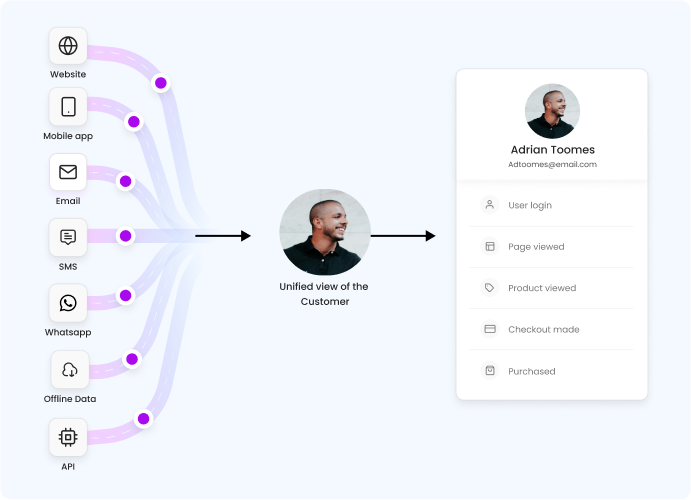
CustomerLabs does identity resolution and builds a unified customer profile. It stitches these touchpoints together using an external ID; a lifetime cookie; so you’re not looking at sessions, you’re looking at people.
When I mean lifetime, it does not expire even if the user is going to show on the 364th day of the year.
You can view every specific touchpoint, real customer journeys. From first touch to purchase to repeat buy.
This is the difference between knowing “someone converted” and knowing who converted, how many times they’ve been to your site, and what pushed them over the edge.
And again everything is still your own first-party data
Cut Your Audience & Events the Way You Actually Need It
Once you know who your customers are, you can actually do something useful with that knowledge.
CustomerLabs lets you build audience segments and custom events and no, these are not the same thing.
Audience segmentation gives you things like: high-value customers, repeat buyers, lapsed customers, VIP cohorts.
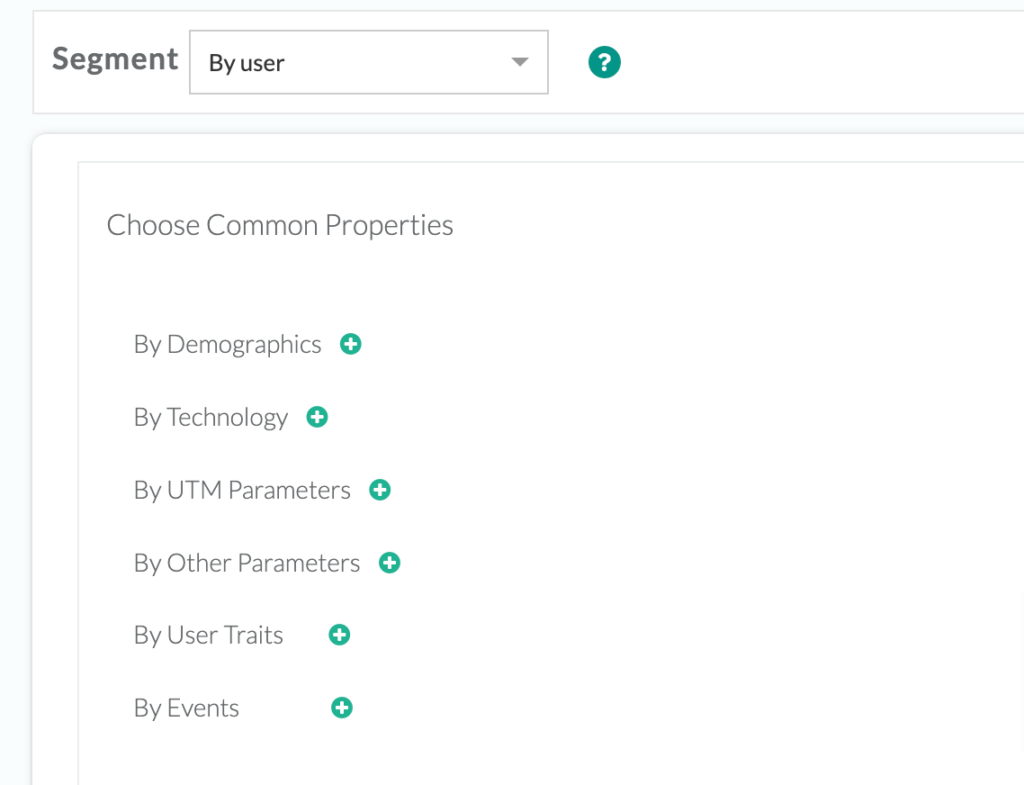
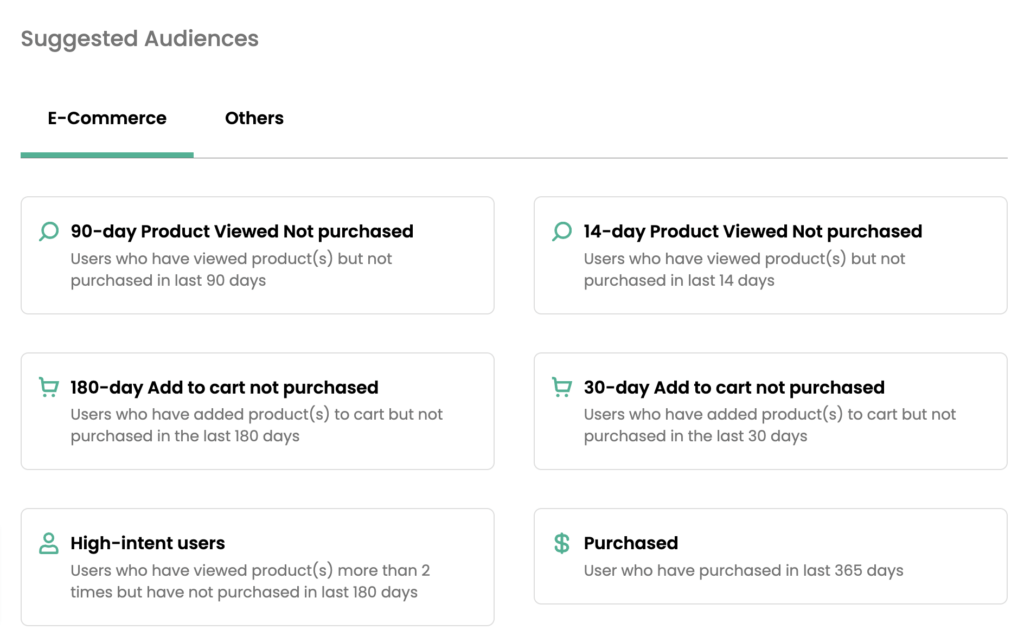
The kind of lists that make your retargeting campaigns actually work instead of spending budget on people who already bought or people who were never going to buy.
Event segmentation aka custom events (key ingredient for signal engineering) goes a level deeper like high AOV buyers, new customers who came in through a specific campaign, users who hit a certain product page three times and still didn’t purchase.
You can slice and dice behavior, not just demographics.
This is where first-party data stops being a compliance box you’re ticking and starts being an actual competitive edge.
By the way, if you are interested in new customer acquisition for your campaigns, you know what to do.
Last but not the least, activation of the data.
Send It Back. Make Your Ads Smarter.
All of this means nothing if the data stays inside the tool.
CustomerLabs pushes your first-party data directly to your ad platforms such as Meta, Google, TikTok, Snapchat and more for activation. Your enriched audiences, your stitched customer profiles, your offline conversions, all of it flows back to where your campaigns run.
Think about it this way. A customer visits your store, browses your best-selling sneakers, adds to cart, doesn’t buy. Three days later they walk into your physical store and purchase it in cash.
With CustomerLabs, that offline purchase gets captured, matched back to the same customer profile through identity resolution, and sent back to your ad platforms as a conversion signal.
Meta now knows the ad worked. It stops retargeting that customer. It finds more people who look like them. With systems like Meta’s Andromeda update relying more on real-time signals, feeding accurate conversion data back into the platform is more important than ever.
Your ROAS goes up not because you changed your creative or your bid strategy, but because your data finally told the truth.
That’s what activation actually means. It’s not just “syncing data.” It’s closing the loop between what happens in the real world and what your ad platforms think happened.
Meta puts it this way: “The Conversions API is designed to create a direct connection between your marketing data and Meta, helping you optimize ad targeting, decrease cost per action and measure results.”
That’s the loop. Track → Stitch → Segment → Activate. CustomerLabs closes it.
Let’s compare with the other so-called tools out there.
Comparison of First-party data tool out there
| Capability | Audience Segmentation Tools (Klaviyo, AdRoll) | CDPs (Segment, Tealium, Adobe) | Integration / Tag Tools (GTM, Stape, Elevar) | CustomerLabs 1PD Ops |
| Server-side + Browser Tracking | Pixel only | ✅ Yes | Server-side only | ✅ Yes |
| Identity Resolution | ❌ No | ⚠️ Complex setup | ❌ No | ✅ Lifetime cookie |
| Audience & Event Segmentation | ⚠️ Basic | ✅ Advanced | ❌ No | ✅ Yes |
| CAPI / Enhanced Conversions | ❌ No | ⚠️ Via integrations | ✅ Yes | ✅ Native |
| Offline Conversions | ❌ No | ⚠️ Needs dev work | ❌ No | ✅ Yes |
| Ad Platform Activation | Own platform only | ⚠️ Via connectors | Event routing only | ✅ Direct |
| Technical Lift | Low | High | High | ✅ Low (no-code) |
| Built for Ad Performance | ❌ No | ❌ General purpose | ⚠️ Partial | ✅ Yes |
Real proof always speaks for itself. So enough with the theory. Let’s speak about real numbers.
Real Brand. Real Numbers. MNMLST.
Still not convinced? Let me show you what this looks like in the real world.
MNMLST. High-end luxury watches. High AOV products, male-dominated market, low repeat purchase rate. The kind of brand where if your data is off, your campaigns are off, and your ROAS tanks.
They came to us with a problem that’s more common than you’d think: their tracking was broken, their signals were weak, and the Meta algorithm had no idea who to actually go after.
Sound familiar?
Here’s what their first-party data situation looked like before:
| Setup & Tracking | Before CustomerLabs |
| Tracking setup | Shopify CAPI — pixel only, standard purchase event |
| Signal quality | Low event match quality across pixels |
| Customer identity | Sessions, not people. No stitching, no journey view |
| Segmentation | None. Every campaign got the same generic signal |
| Algorithm training | One signal for all campaigns, all goals, all buyers |
Generic data in. Generic results out. The algorithm was doing its best with nothing to work with.
So here’s what CustomerLabs actually did.
First, we fixed the foundation. Replaced Shopify CAPI with CustomerLabs server-side tracking and CAPI, cleaner data, better event match quality, no more signal leakage.
Then we did identity resolution. Stitched the customer journey together so MNMLST could finally see people, not sessions. Who visited, when, how many times, from which device, what they looked at before buying.
Then came the part that actually moved the needle, event segmentation.
Instead of firing one generic “purchase” event for everything, we created custom conversion events broken down by AOV and customer category:
- High AOV men
- Mid AOV men
- Low AOV men
- Women by product category
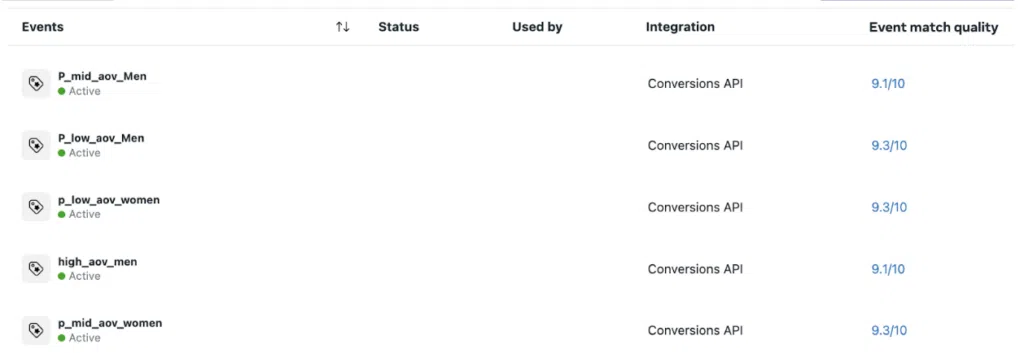
Each campaign now had its own specific signal to train on. Remember what we said earlier, each campaign is its own AI model. Feed it the right data, it finds the right people.
Here’s what changed:
| Before | After | |
| Conversion signal | Standard purchase only | Custom events by AOV + gender + category |
| Event match quality | Low | Significantly improved across all pixels |
| Algorithm training | Same signal, every campaign | Each campaign trained for its exact goal |
| Female buyer targeting | No control | Dedicated signal, precise targeting |
| Hero products | Over-reliant on one bestseller | Built across every category |
| Revenue | Baseline | +117% increase |
Campaigns optimized for mid-AOV men delivered the highest share of mid-AOV men purchases. Campaign for low-AOV men? Same story. The algorithm did exactly what it was trained to do, because it was finally being trained correctly.
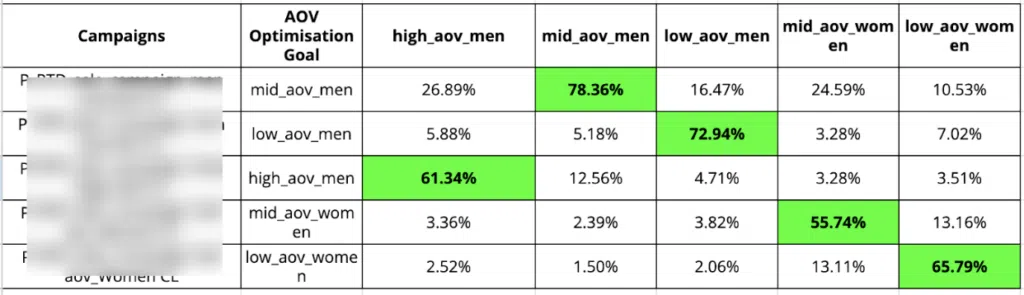
With the right tool. 117% revenue growth is what happens when you stop patching your data and start owning it.
(Read the Full MNMLST case study)
So, Where Does This Leave You?
First-party data isn’t a future problem. It’s a problem right now. Every day you’re running campaigns on leaky tracking, weak signals, and fragmented customer data, you’re leaving money on the table.
You don’t need five tools to fix it. You need one that actually does the full job.
Track everything. Know who your customer is. Segment the right way. Send it back to your ad platforms. That’s it. That’s the loop.
CustomerLabs 1PD Ops does exactly that. No exaggeration. You’ve seen the comparison, you’ve seen the numbers.
But if you’re still running on without proper setup, you already know what needs to change.
Ready to start? Talk to the CustomerLabs team and implement your first-party data stack today without fighting with the codes.