Early 2025, we started having a surge of health and wellness brands who jam in with common concerns of events being blocked and the ad is not likely to have any conversions happening.
One such brand we met was Who Shall Not Be Named (due to NDA) and this is how their events looked at that point of time.
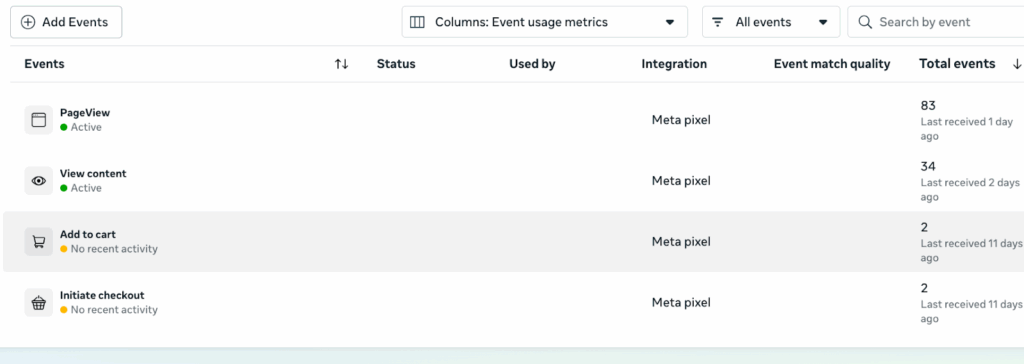
This Personal Wellness and Lifestyle brand is one of the fast-grown wellness category brands and in fact in the DTC market. People look after their products not just a one-time purchaser but recurring orders.
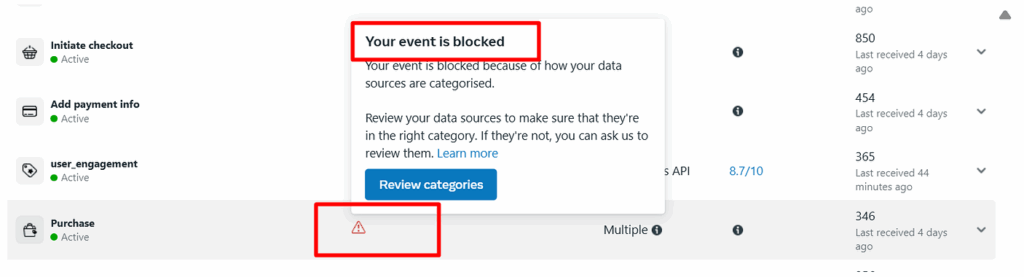
Why Did Meta Block Bottom-Funnel Conversion Events?
If you’re running ads in the Health & Wellness space, whether it’s personal wellness, sexual wellness, or anything in between, you probably felt the hit earlier this year. Meta rolled out some pretty strict restrictions, and suddenly bottom-funnel conversion tracking started breaking.
So, What happened? In one word: Privacy
Meta doubled down on protecting the users privacy by safeguarding user information like PII (Personally Identifiable Information) and PHI (Protected Health Information). That meant brands could no longer just send every event over to Meta. Instead, Meta put the control in marketers hands, deciding what data gets shared became their responsibility.
And Here’s How Meta Explained it:
“Core setup is a set of data restrictions that can be applied to a Meta Business Tool by you or by Meta. There is an option in Meta Events Manager that you can use to turn on data restrictions for the Meta Business Tool that you are using.”
So, What did Meta Actually Block?
Basically two things:
- Custom parameters – Anything outside Meta’s standard fields (so those extra event details you pass through? Gone).
- URL-level data – Everything after the domain, including query strings and product names.
For example, this personal wellness and lifestyle brand’s product URLs track the Personal Health Information to Meta. This ideally should not be shared as it is violating the users’ privacy.

And in short, the signals that powered the bottom-funnel optimization just disappeared.
Now, Can default Shopify CAPI support these brands to run ads and scale the campaigns?
Not just this brand, but Shopify has a good share of health and wellness brands and they were/are using the Shopify CAPI to send conversions to Meta.
But Shopify CAPI failed this Brand here
Everyone of us knows that we are great fans of Shopify CAPI . Here is a simple analogy –
“Shopify is like a supermarket, you can buy all the ingredients. But expecting it to whip up sugar-free meals for dad and a double-cheese burger for your teen? Nope, that’s not its job.”
Let’s Ditch “just The Shopify CAPI”
We released our app on Shopify, which means we love Shopify haha .. but it’s just Shopify Meta CAPI. It is just an add-on but not primarily for brands and performance marketers to rely 100%.
Here we go, we fixed this brands full-funnel using first-party data.
Send bottom-funnel events seamlessly to Meta by protecting PHI
There is a 7 step procedure to follow to abide by health and wellness guidelines by Meta. Here you go:
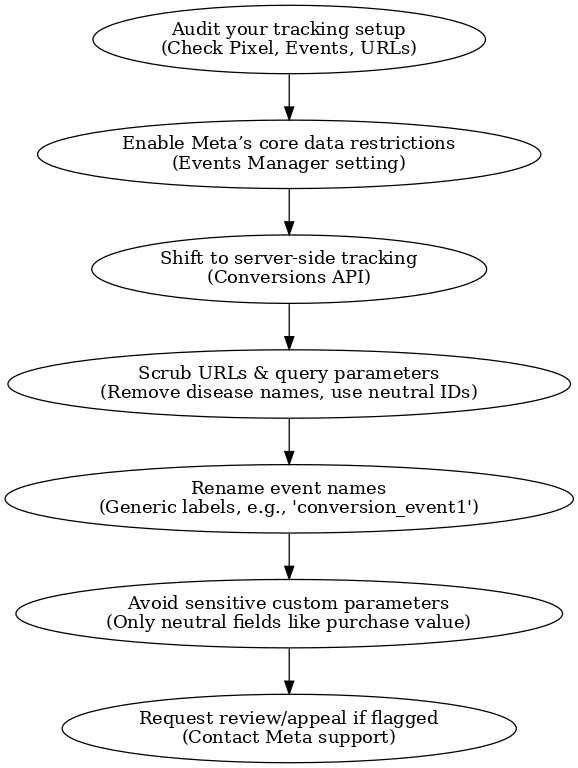
We did the three steps for the this brand to win back Meta campaign.
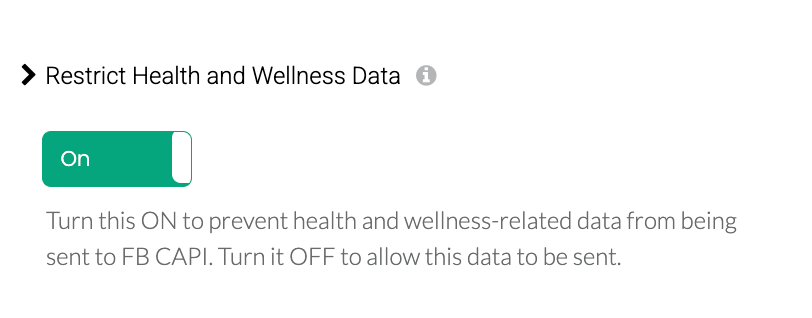
- Turn on the toggle to scrub the URL
Turning on the toggle does the major job of scrubbing the URLs and hashing PHI information before sending to Meta.
- Protecting from sending the PHI via URL – Pure server-side tracking
For the wellness brands, the event should not be sent via browser side in order to avoid sending the PHI via URL.
For this brand, we turned off all the client side event and relied 100% on server side tracking.
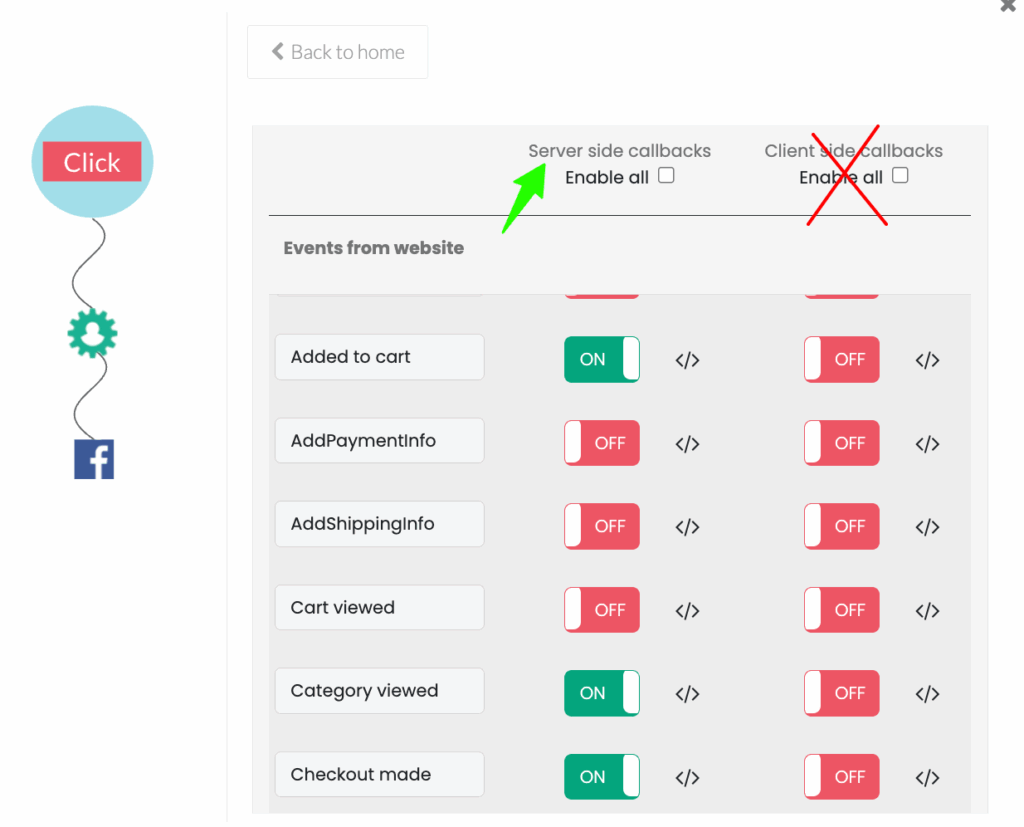
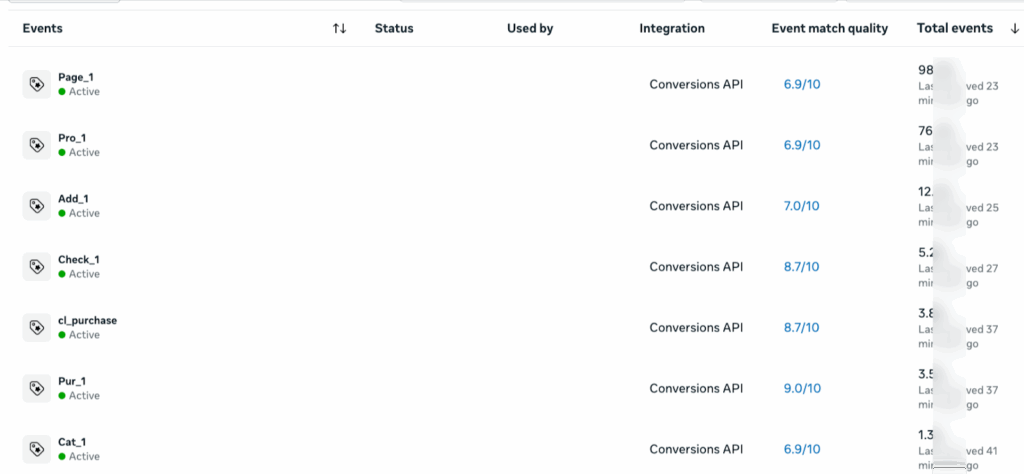
- Renamed the event name for 100% tracking
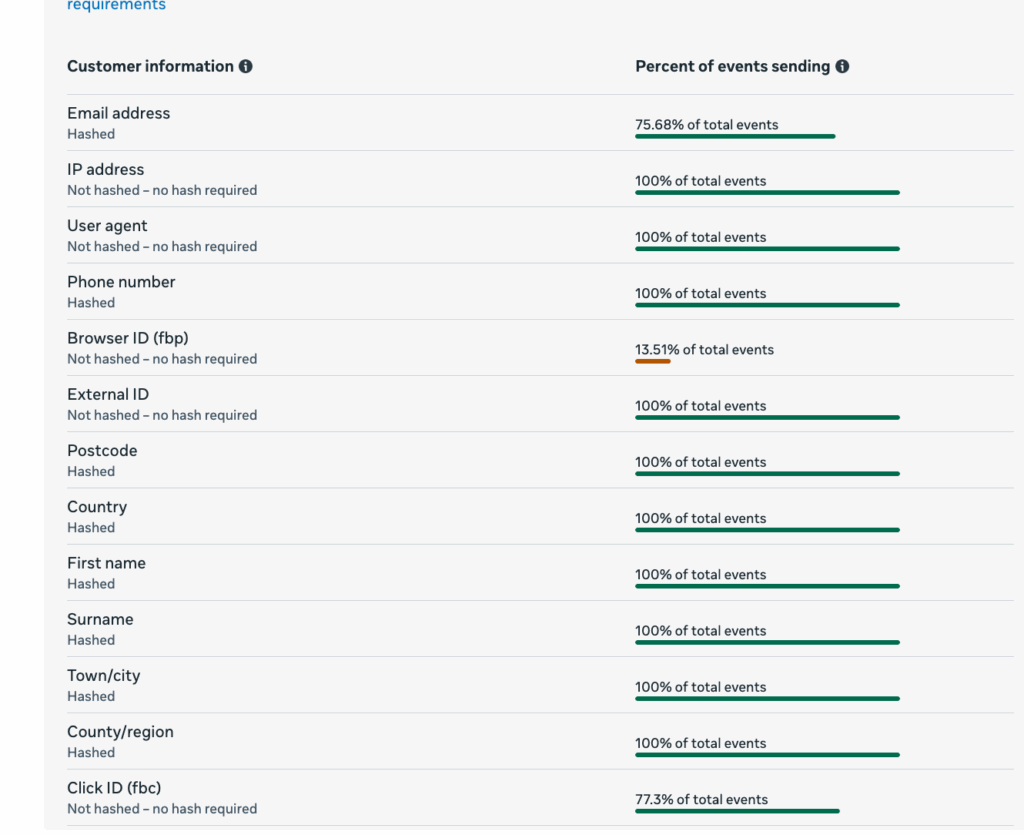
We renamed all the event names so the events don’t get blocked by Meta as per core setup. These are the full funnel setup for this brand with a highest Event Match Quality score.
Scaling the campaigns using first-party data for roaring the ROAS back
After the health and wellness flag, the brand got sunk in the performance and here we go back roaring with the performance with a stable ROAS of 2.5 to 2.9.
Before:
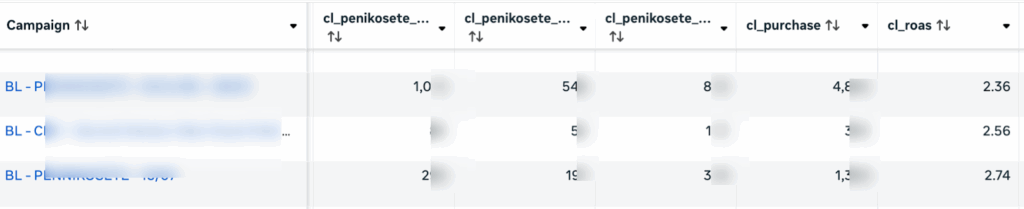
After:
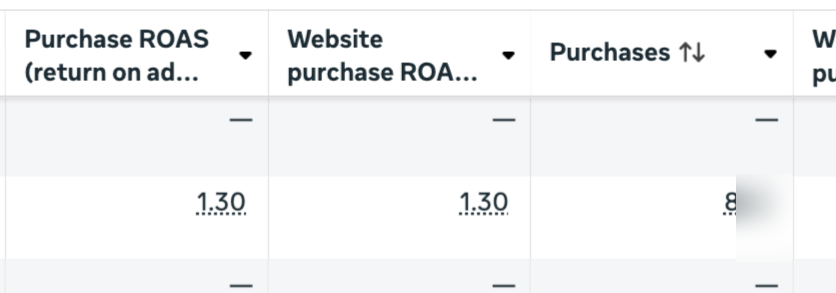
Measure the product performance within Meta ad reporting
Within Meta ad reporting, we have set up the reports to measure which campaign is driving high sales breaking down by product level.
This gives a lot of control in understanding the performance and controlling the ad spend.
Our next focus is to work on the nCAC and measure how the campaigns are performing.

Final conclusion:
First-party data is the foundation → When brands own their data, they stay compliant while still feeding Meta the right signals for optimization.
Server-side tracking is non-negotiable → It’s the only way to ensure PHI/PII is scrubbed out while keeping bottom-funnel events intact.
Shopify is for storefronts, not CAPI → It’s perfect for selling online, but its default CAPI was never designed to handle sensitive data restrictions.
Simple setup makes the difference → With the right configuration, URLs get scrubbed, PHI is hashed, and event names are cleaned; all with just a toggle.
Audiences without the risk → First-party data lets you build and activate high-quality audiences for remarketing; without ever getting flagged for PHI.
Wanna discuss more on this setup, schedule a consultation call or try this setup free for 14 days.