Server-side tracking
Robust server-side tracking to collect event and audience signals without loss and sync them with ad platforms seamlessly.
Learn More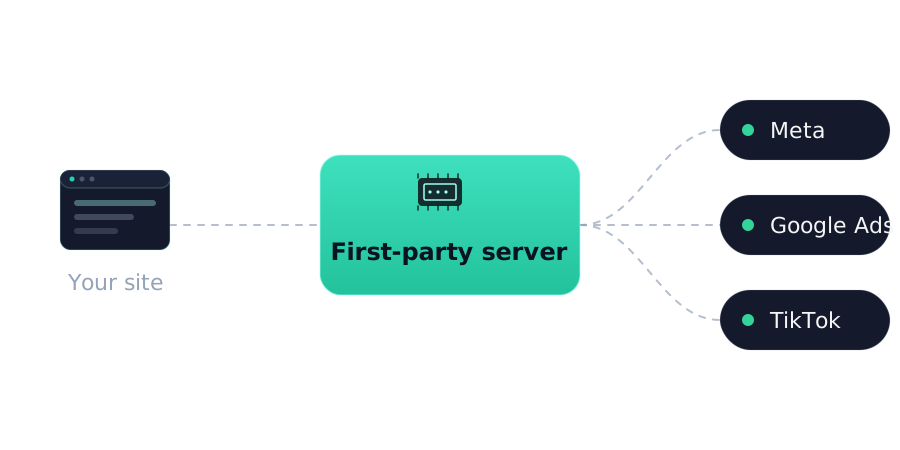
Fix attribution loss and fragmented data first. Then engineer signals so Meta, Google, and TikTok learn from the orders you actually want more of.
SIGNALS THAT MATTER
THE 1PD OPS MATURITY CURVE















“Google and BCG found that brands deploying first-party data across all activation methods achieved 2.9× more revenue than brands that didn't.”
Source: “Reasonable Marketing With First-Party Data”, BCG.

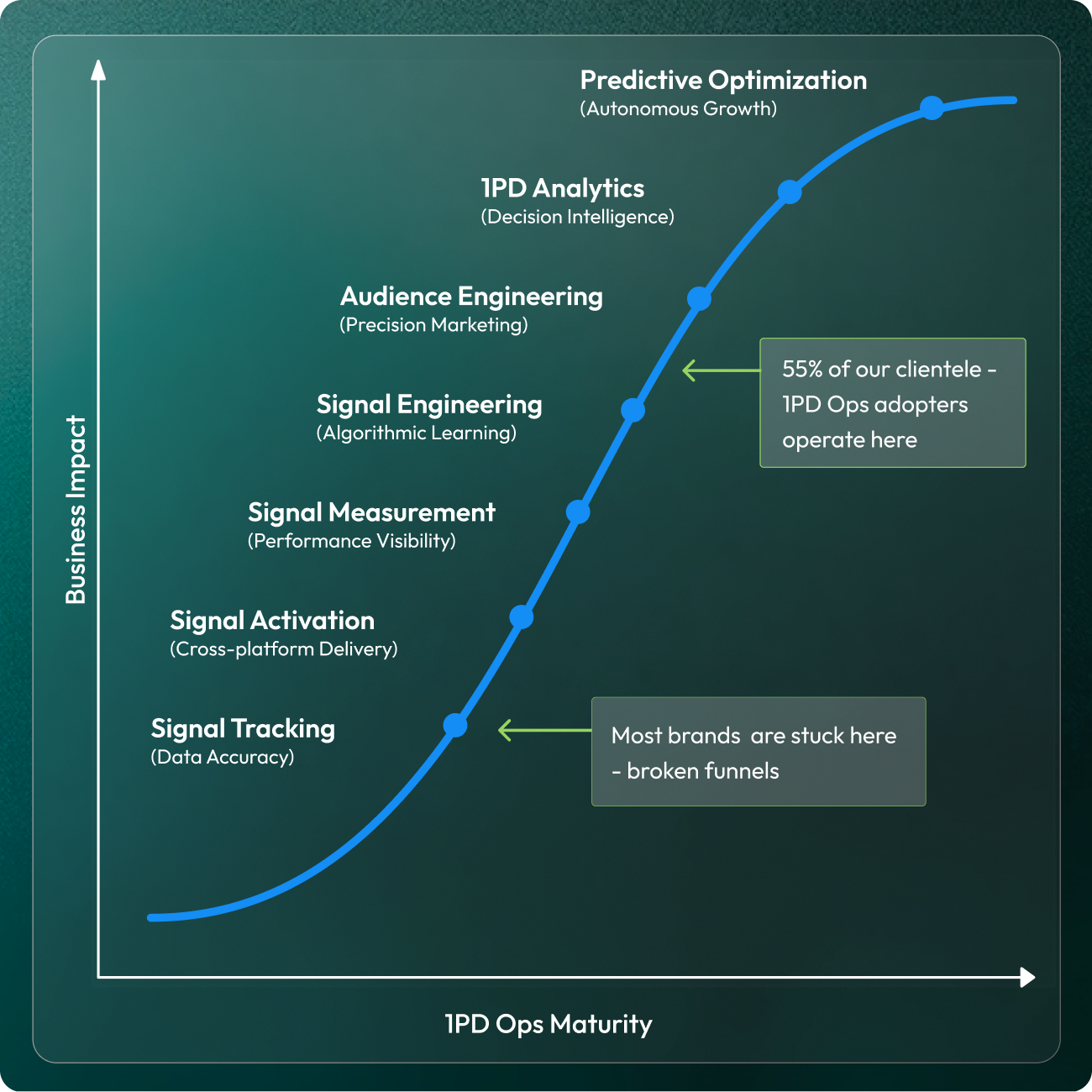
Most brands fix their tracking and stop there. First-party data ops is what happens when you go further.
Robust server-side tracking to collect event and audience signals without loss and sync them with ad platforms seamlessly.
Learn More Don't let fbclid and gclid expire. Improve your attribution and ads reporting by storing cookies forever which makes your ROAS shine.
Learn More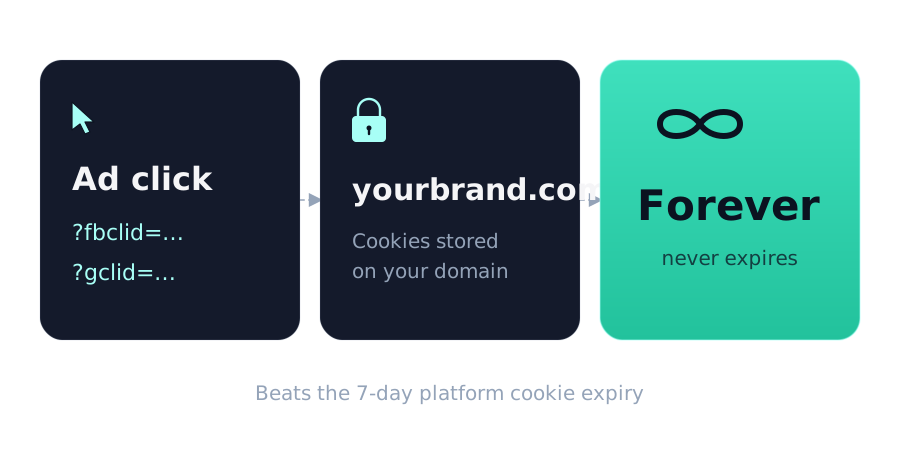
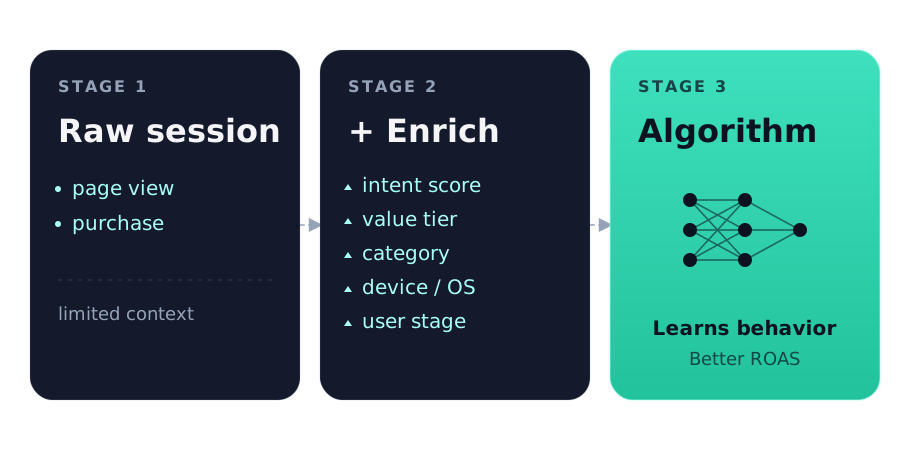
Algorithms learn sequentially. Enriched sessions with proper events help them understand behavior better and target more relevant audiences.
Map your business goals with your campaigns
86% Increase in New Customer Acquisition
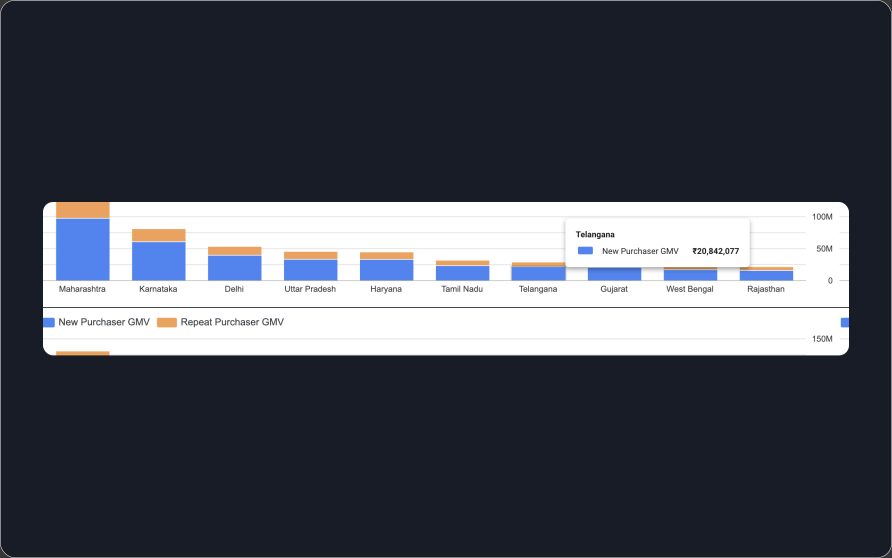
Scale new-customer growth by training Meta, Google, and TikTok algorithms with first-party signals so prospecting finds the right buyers.
Learn More37% ROAS Increase from High-Value Order Optimization
Feed high-AOV purchase signals so algorithms attract higher-value buyers at efficient spend.
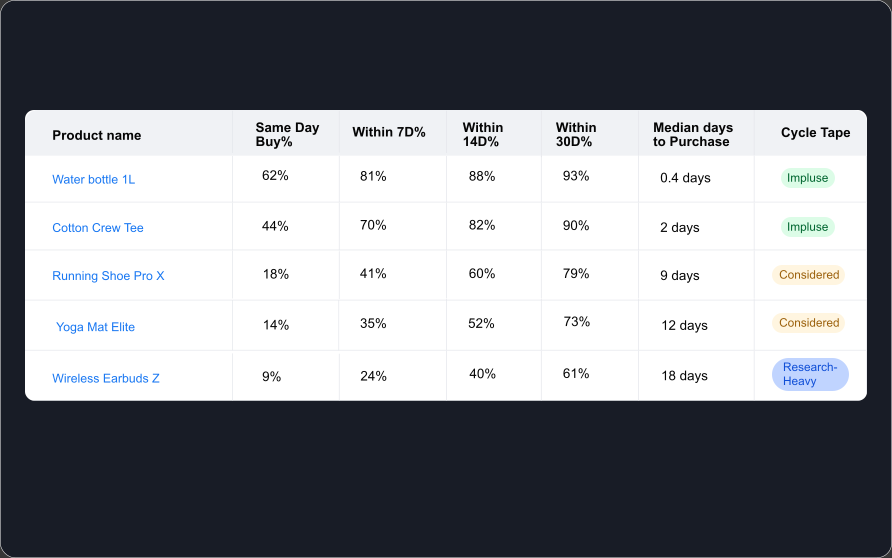
Learn MoreOptimize campaigns for recurring purchases instead of one-time purchasers to increase LTV and make meaningful amount spent.
200% Lift in ROAS for CampaignProduct / Category
Scale each campaign for specific categories or individual products by sending signal engineering custom events independently without cannibalizing budget. Eg: Shoe_Purchase, Women-Purchase.
Learn More2x Custom Audience Match Rates in Ad Platforms
Run retargeting campaigns with double the audience reach because 1P signals restore the data and cookies of all your website visitors.
Learn MoreRetention via 1P signals across WhatsApp, push, and email triggers post-purchase upsell/cross-sell to lift repeat buys and LTV.
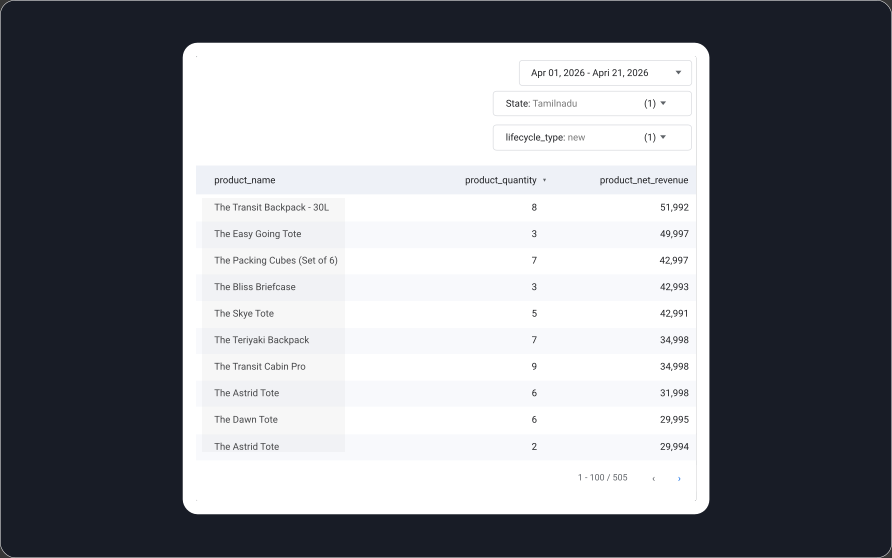
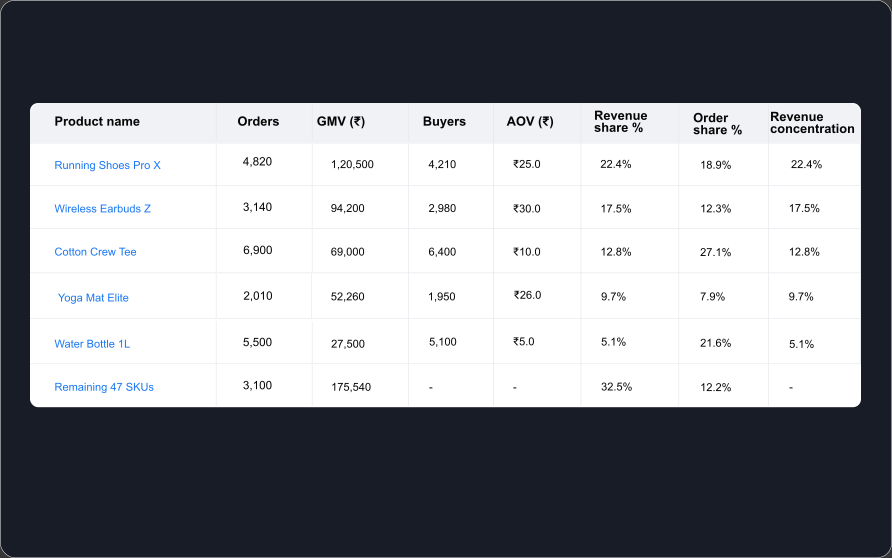
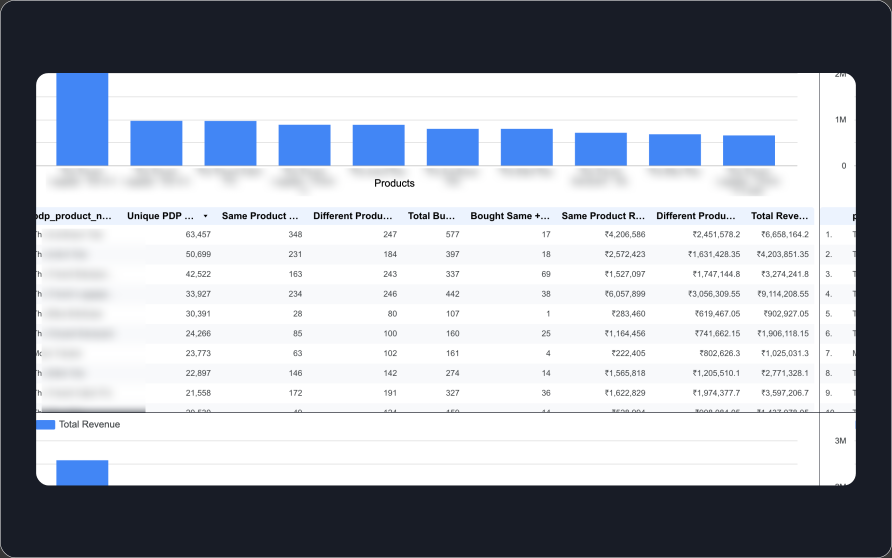
Catalog campaigns already have the highest conversion rates. The real unlock is identifying which products are selling and which aren't — building the right product sets and first-party signals to scale every SKU across every vertical, not just the ones already performing.
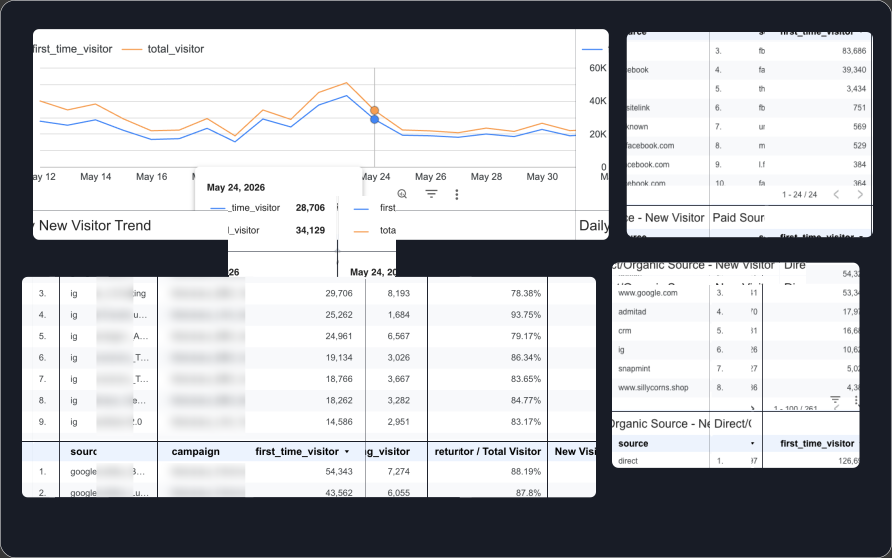
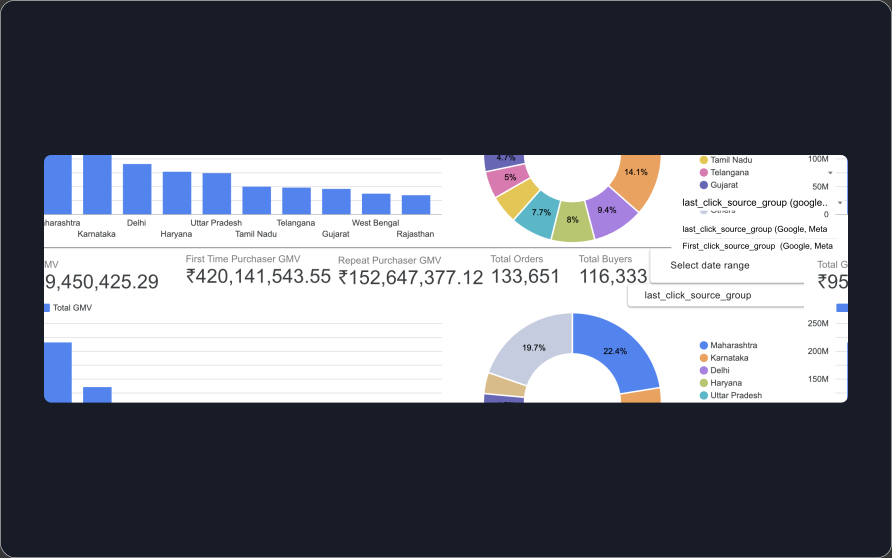
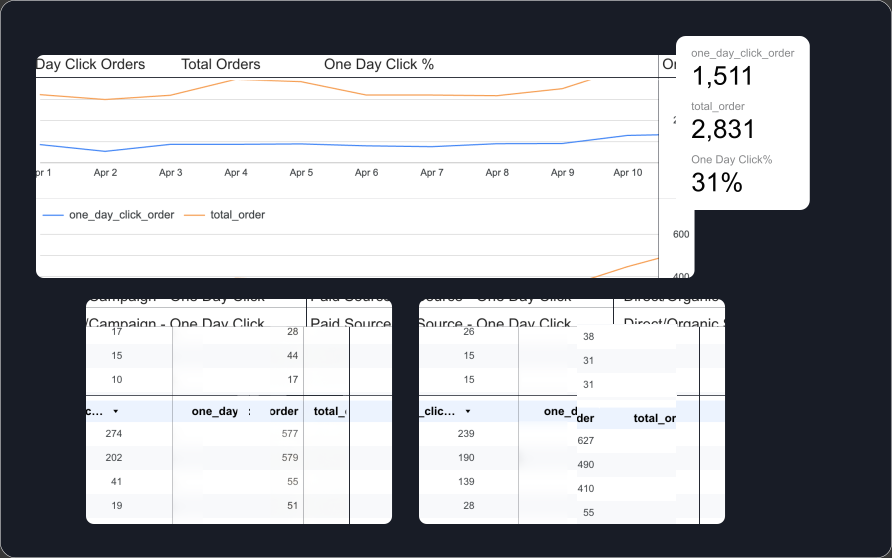
Connect BigQuery to build attribution reports by channel, revenue, or product using click-based and data-driven models.
CustomerLabs
First-party data + signal engineering
Native platform CAPI
Shopify, WooCommerce defaults
Other tracking tools
Generic server-side tools
CLIENT RESULTS
Real results from brands using the same signal infrastructure you can deploy for your clients.
37% increase in ROAS by training the algorithm. Retaining the cookies and training algorithm using 1PD Ops.
Read full storyScaled 86% new customer. 14% lower CPP within 7-14 days after optimizing toward new-customer signals.
Read full storyIncremental revenue by re-activating Audience reactivation beyond 180 days.
Read full storyIncrease in revenue by 117%. Sustainable ROAS irrespective of trends and festive seasons.
Read full storySEE YOUR SIGNALS
Book a demo and we will map the signal gaps limiting new-customer growth, revenue quality, and platform learning in your current commerce stack.
FAQ
Most teams already have CAPI live. The real question is whether the platform is learning from the right purchase signal.
What is Shopify CAPI and why doesn't it improve ROAS on its own?
Shopify CAPI restores purchase event delivery — it fixes the volume problem from iOS 14. CustomerLabs adds the layer above: separating new vs. repeat buyers, firing AOV-segmented events, splitting prepaid from COD orders, and routing refund retractions. The delivery problem is solved. The training problem is what CustomerLabs fixes.
Can Shopify CAPI separate new customers from repeat buyers?
No. Shopify CAPI sends every purchase as the same generic event — Meta and Google can't tell first-time buyers from repeat ones. CustomerLabs tags each order with new_customer = true/false at the source, so your prospecting campaigns optimise toward first-time purchasers and your retention campaigns optimise toward returning ones.
Can ecommerce conversion tracking handle COD and fulfillment feedback?
Yes. CustomerLabs sends only prepaid purchases as your conversion signal — COD orders are filtered out. When an order is fulfilled, cancelled, or refunded, that status flows back to Meta and Google as well, so the platforms learn from real revenue, not gross checkouts. RTO drops, prepaid mix improves, and margin per order rises.
How do I send high-AOV or category-level purchase signals to Meta and Google?
CustomerLabs lets you define the signal per campaign. Set a rule — order_value > ₹5,000, or category = 'skincare', or subscription_started = true — and only matching purchases fire as the conversion event. Meta's and Google's algorithms then optimise toward that specific business outcome, not a flat purchase count.
How long does better ecommerce conversion tracking take to change performance?
Most brands see EMQ scores climb to 8–10 within the first week of deploying CustomerLabs. Campaign learning shifts follow within 7–14 days as Meta and Google retrain on the new signals. CPP, new-customer share, and ROAS typically move meaningfully inside the first 30 days.
Do we need engineers to move beyond Shopify's default conversion tracking?
No. CustomerLabs is built for ecommerce marketers, not developers. Shopify and WooCommerce setups use a plugin with no code required. Other platforms drop in a JavaScript snippet. Most teams are live within 30 minutes — and signal rules are configured through the dashboard, not deployed by engineering.
What is Shopify CAPI and why doesn't it improve ROAS on its own?
Shopify CAPI restores purchase event delivery — it fixes the volume problem from iOS 14. CustomerLabs adds the layer above: separating new vs. repeat buyers, firing AOV-segmented events, splitting prepaid from COD orders, and routing refund retractions. The delivery problem is solved. The training problem is what CustomerLabs fixes.
Can Shopify CAPI separate new customers from repeat buyers?
No. Shopify CAPI sends every purchase as the same generic event — Meta and Google can't tell first-time buyers from repeat ones. CustomerLabs tags each order with new_customer = true/false at the source, so your prospecting campaigns optimise toward first-time purchasers and your retention campaigns optimise toward returning ones.
Can ecommerce conversion tracking handle COD and fulfillment feedback?
Yes. CustomerLabs sends only prepaid purchases as your conversion signal — COD orders are filtered out. When an order is fulfilled, cancelled, or refunded, that status flows back to Meta and Google as well, so the platforms learn from real revenue, not gross checkouts. RTO drops, prepaid mix improves, and margin per order rises.
How do I send high-AOV or category-level purchase signals to Meta and Google?
CustomerLabs lets you define the signal per campaign. Set a rule — order_value > ₹5,000, or category = 'skincare', or subscription_started = true — and only matching purchases fire as the conversion event. Meta's and Google's algorithms then optimise toward that specific business outcome, not a flat purchase count.
How long does better ecommerce conversion tracking take to change performance?
Most brands see EMQ scores climb to 8–10 within the first week of deploying CustomerLabs. Campaign learning shifts follow within 7–14 days as Meta and Google retrain on the new signals. CPP, new-customer share, and ROAS typically move meaningfully inside the first 30 days.
Do we need engineers to move beyond Shopify's default conversion tracking?
No. CustomerLabs is built for ecommerce marketers, not developers. Shopify and WooCommerce setups use a plugin with no code required. Other platforms drop in a JavaScript snippet. Most teams are live within 30 minutes — and signal rules are configured through the dashboard, not deployed by engineering.