You can’t improve new customer acquisition until you can measure it — and you can’t measure it without a first-party signal that identifies first-time buyers.
Every business, underneath all its other goals, wants the same thing: to grow revenue.
Your existing customers carry a lot of that revenue, and they matter. But the part that actually expands the business over time is new customers.
I know what you’re thinking.
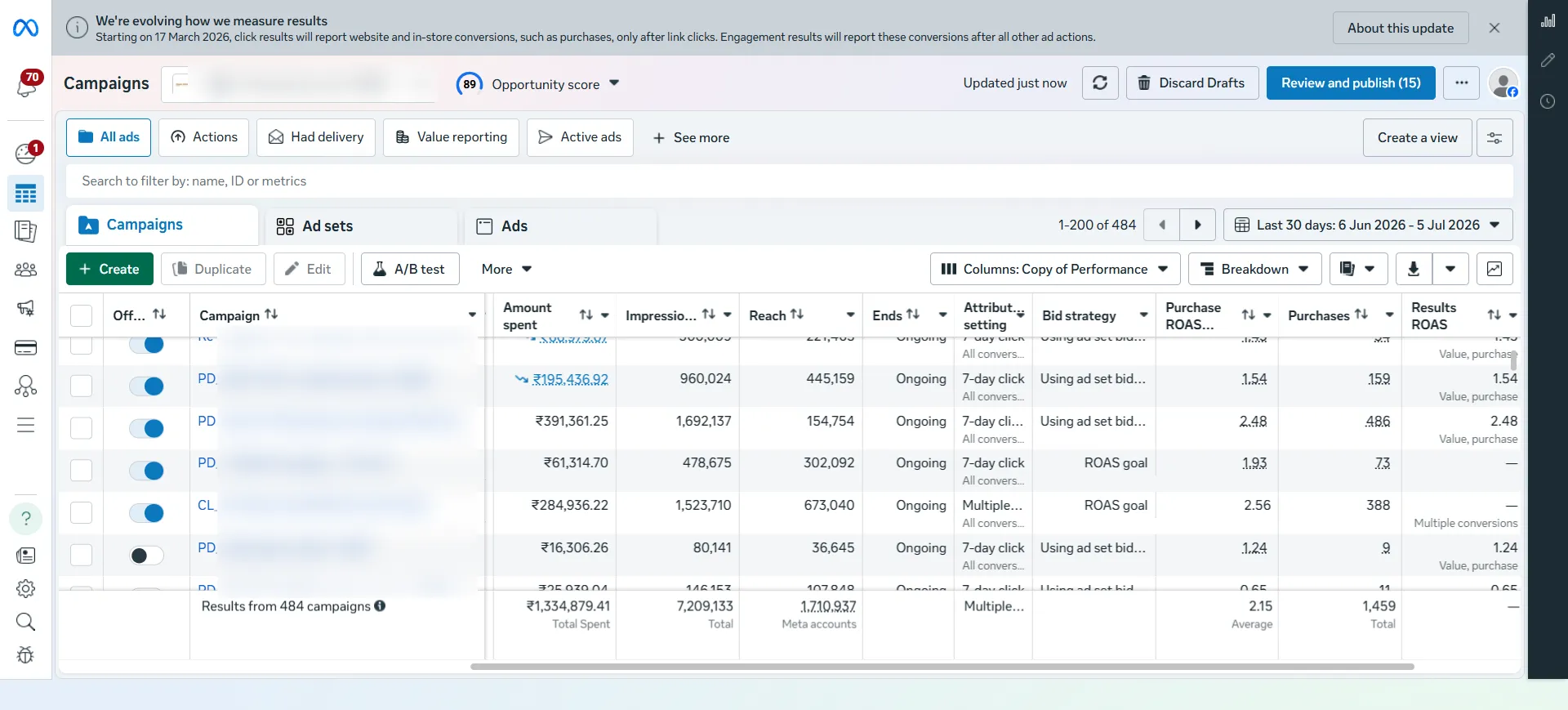
“We’re already running acquisition campaigns. We track purchases and ROAS looks good. Then what’s the problem?”
Fair question. So let me ask you one instead.
How many of last month’s purchases came from people buying from you for the very first time?
Not total purchases, or revenue, or ROAS. First-time buyers. Net-new people who’ve never bought from you before. That’s the engine of real growth.
If you don’t know the answer — and most brands don’t — you’re not actually measuring customer acquisition. You’re measuring purchases.
And that single missed signal changes everything, because of one simple truth: you can’t improve new customer acquisition until you can measure it. And you can’t measure it until you create a first-party signal that identifies first-time buyers.
Existing customers buy again. That’s great. But sustainable growth comes from bringing new customers into the business consistently. And that’s where most acquisition campaigns quietly fall apart.
The problem isn’t your creatives, or your targeting, or your budget.
Neither Meta nor Google knows who’s buying from you for the first time. And if the platforms can’t tell the difference between a new customer and a repeat purchaser, how do you expect them to optimise for one?
Let’s start there.
The Business Problem: You Don’t Know If Your Marketing Is Actually Acquiring New Customers
Let’s say you put $50,000 into ads this month and pulled back $200,000 in revenue. Great month, right?
Maybe. Or maybe most of that came from customers who already knew you and would have bought anyway. You genuinely can’t tell — and that’s the problem.
The challenge here isn’t the budget, it’s the visibility. You’re making investment decisions — scale this, cut that, double down here — on numbers that can’t answer the one question that actually matters for growth: how many of these are new?
Fix the visibility and the budget decisions get obvious. Leave it broken, and you’re guessing with real money.
The Marketing Problem: “I’m Scaling My Campaigns… So Where Are the New Customers?”
Zoom into the marketing team and it gets sharper.
Marketers run “acquisition” campaigns specifically to bring in new customers. But when the purchases roll in, they arrive as one undifferentiated pile — net-new buyers and retargeted existing customers mixed together, with no line drawn between them.
So the campaign called “acquisition” might be doing almost no acquiring. Nobody can prove it either way. And you can’t optimise toward a number you can’t see.
It’s tempting to point at the platforms and say they should just handle this. But look at what they actually receive before you blame them.
Why Meta and Google Can’t Tell the Difference Either
When a sale happens, the platforms get a Purchase event. It carries the order value, the currency, the products, and some hashed customer details for matching.
But it never carries whether this was the person’s first purchase, order count, or customer status.
So put yourself in the algorithm’s shoes. You asked it to find purchases, and purchases are all it can see — not new-customer purchases. It has no idea a first-timer and a five-time repeat buyer are different. So it optimises for Purchase Probability, not New-Customer Probability.
And repeat buyers are the easy win. They know you, they’ve bought before, and they convert cheaper and faster. So the machine drifts straight toward them.
The algorithm isn’t broken, it isn’t even wrong — it’s optimising exactly what you handed it. You just handed it the wrong goal without meaning to.
Marketers feel this happening, so they reach for two fixes. Both fail, and it’s worth understanding why.
The Two Fixes Marketers Try and Why They Fail
Fix #1: Lookalikes of your purchasers
Why you try it: it sounds bulletproof. Build a lookalike of your buyers so Meta goes and finds more people like your customers.
Why it fails: that lookalike is trained on your existing customer base. And Meta, hunting for the users most likely to convert, leans toward people who already resemble those customers — your engaged audience, your past website visitors, people already orbiting your brand.
You asked for “people like my buyers” and got “people already close to buying.” Not the same as net-new.
Fix #2: Excluding existing customers and visitors
Why you try it: also logical. Exclude every website visitor and existing customer, and whoever’s left has to be new. Right?
Why it fails: two reasons, and the first one is subtle.
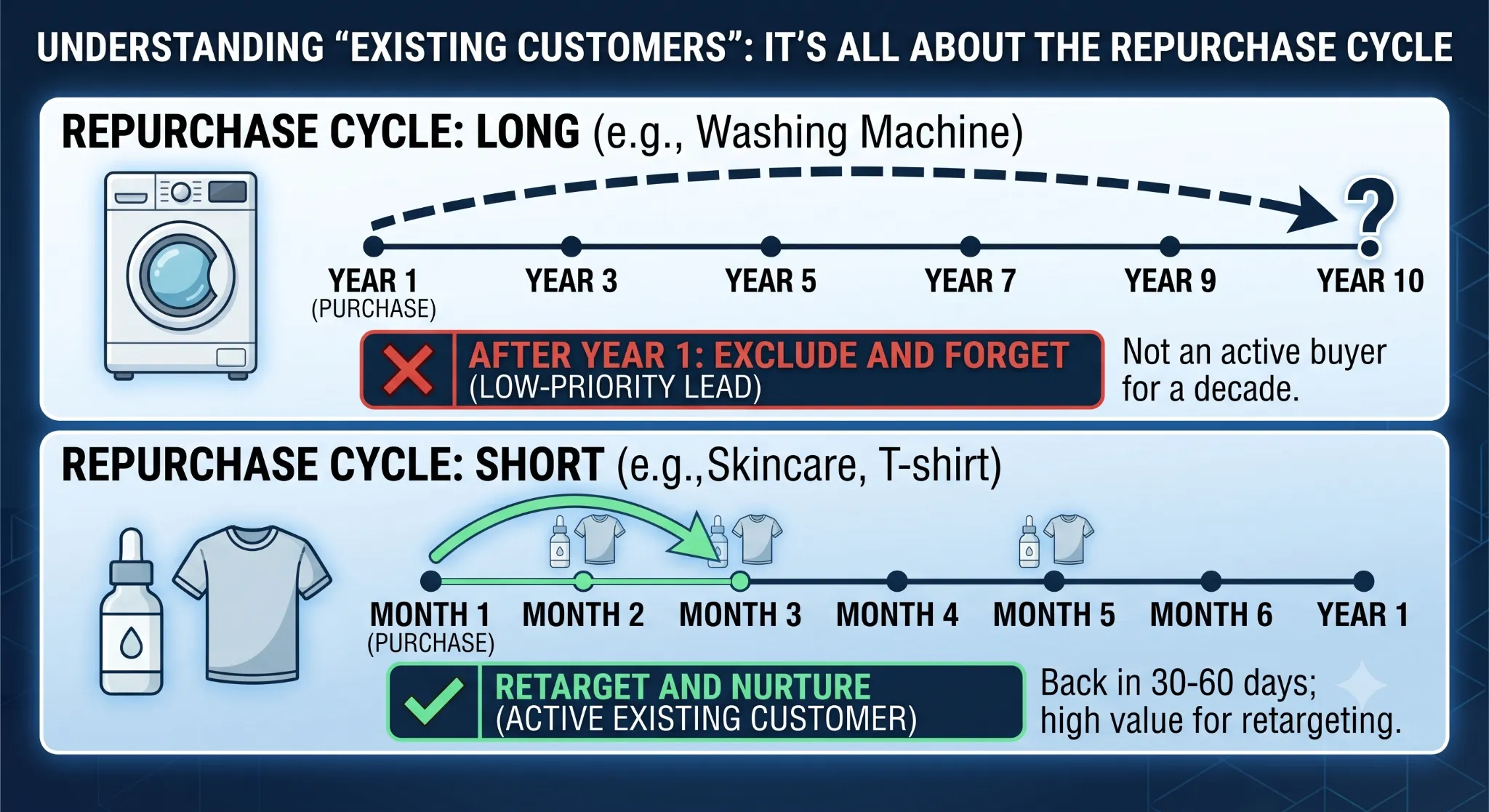
Start with a question most brands never stop to ask — who even counts as an “existing customer” for you? It depends entirely on what you sell.
If I buy a washing machine, I’m not buying another one for ten years, so as far as acquisition goes I’m essentially a dead lead — you’d want me excluded and forgotten.
But if I buy skincare, or a t-shirt, I’m back in 30 to 60 days, which makes me a very-much-alive existing customer you’d retarget, not re-acquire. “Existing” isn’t one definition. It’s set by your repurchase cycle, and it’s different for a mattress brand than for a coffee subscription.
Now the second, more mechanical reason. Most brands don’t store their audience data independently. They lean on the Meta Pixel, and the Pixel holds a recent window of website-visitor data — around 28 days. So the moment you build an exclusion list, you’ve got nothing beyond that window. Everyone older simply isn’t excluded, and the campaign reaches them anyway.
This is the exact wall DTC brands hit. The campaign works fine at a low budget, then they scale it and it falls apart — not because the campaign is broken, but because it was never built to find new people in the first place.
Notice what both failures share. It’s not a targeting problem. It’s a missing signal.
The Real Fix: Create a First-Party Signal for First-Time Buyers
Come back to the sentence this whole thing rests on: you can’t measure new customer acquisition without a first-party signal that identifies first-time buyers.
That signal isn’t hard to define — it’s already in your source data. A customer with one order is new; more than one, not new.
Order Count = 1. That’s the whole definition.
The work is capturing that attribute and shaping it into an event the platforms can actually optimise on. Taking data you already own and turning it into a signal the machine can learn from is what we call signal engineering.
And here’s the sequence that makes it work, start to finish: create the signal, validate it, measure it, set a baseline, then optimise. Skip a step and the whole thing wobbles. Let’s walk each one.
Step 1 — Create the New Customer Purchase Signal
The path is simple once you see it: Shopify holds the order data → CustomerLabs sits on top as the first-party layer → it checks the order count → creates a New Customer Purchase signal → and sends it to Meta CAPI and Google Ads.
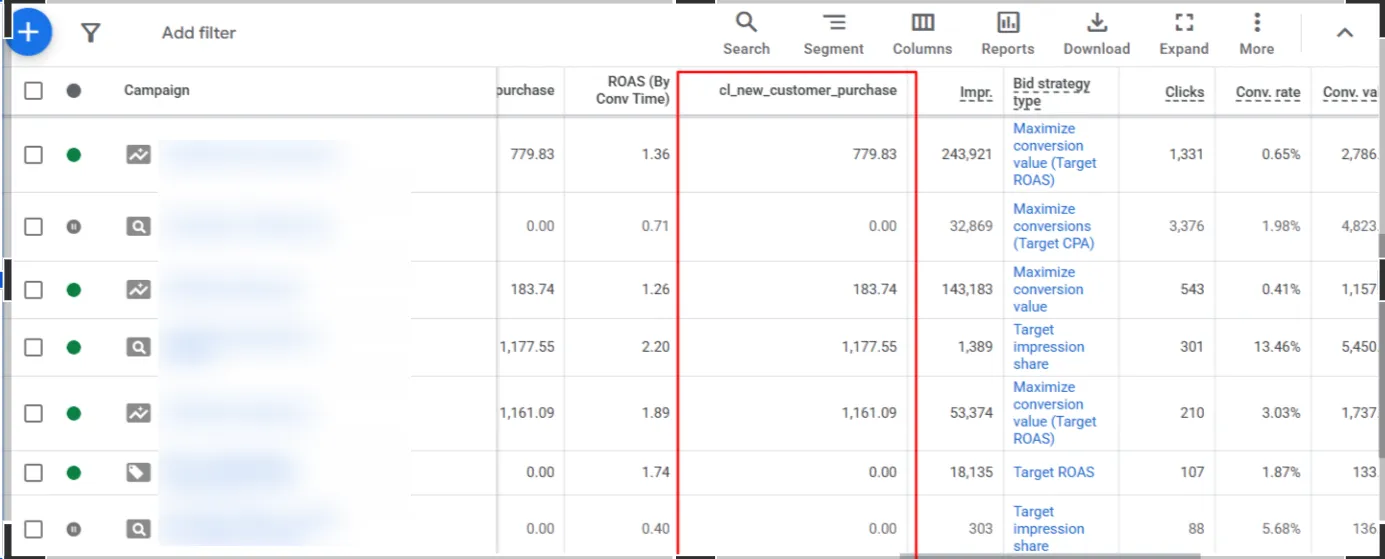
You’re defining an event that only fires when a purchase is someone’s very first.
| Parameter | Configuration |
|---|---|
| Signal Name | New Customer Purchase |
| Base Event | Purchase / Order Completed |
| Filter Condition | Number of Orders = 1 (from source data) |
| Signal Type | Conversion Event |
That filter is the whole trick — the same purchase event everyone fires, but counted only when the order count is one.
While you’re here, build the two exclusion audiences that keep prospecting clean:
- All website visitors — the last 90, 180, or 365 days, depending on how far back you don’t want people re-entering your prospecting.
- All purchasers — and this is where that repurchase-cycle thinking pays off. Set the window by your definition of a new customer. Sell appliances or furniture? A buyer from 12 months ago is still worth excluding from acquisition. Sell consumables like cosmetics or apparel? A 6-month window might be right, because that buyer is an active repeat customer, not a lapsed one.
There’s no universal number here. Your category decides it.

Step 2 — Validate the Signal
Do not skip this, and do not point ad budget at a signal you haven’t checked.
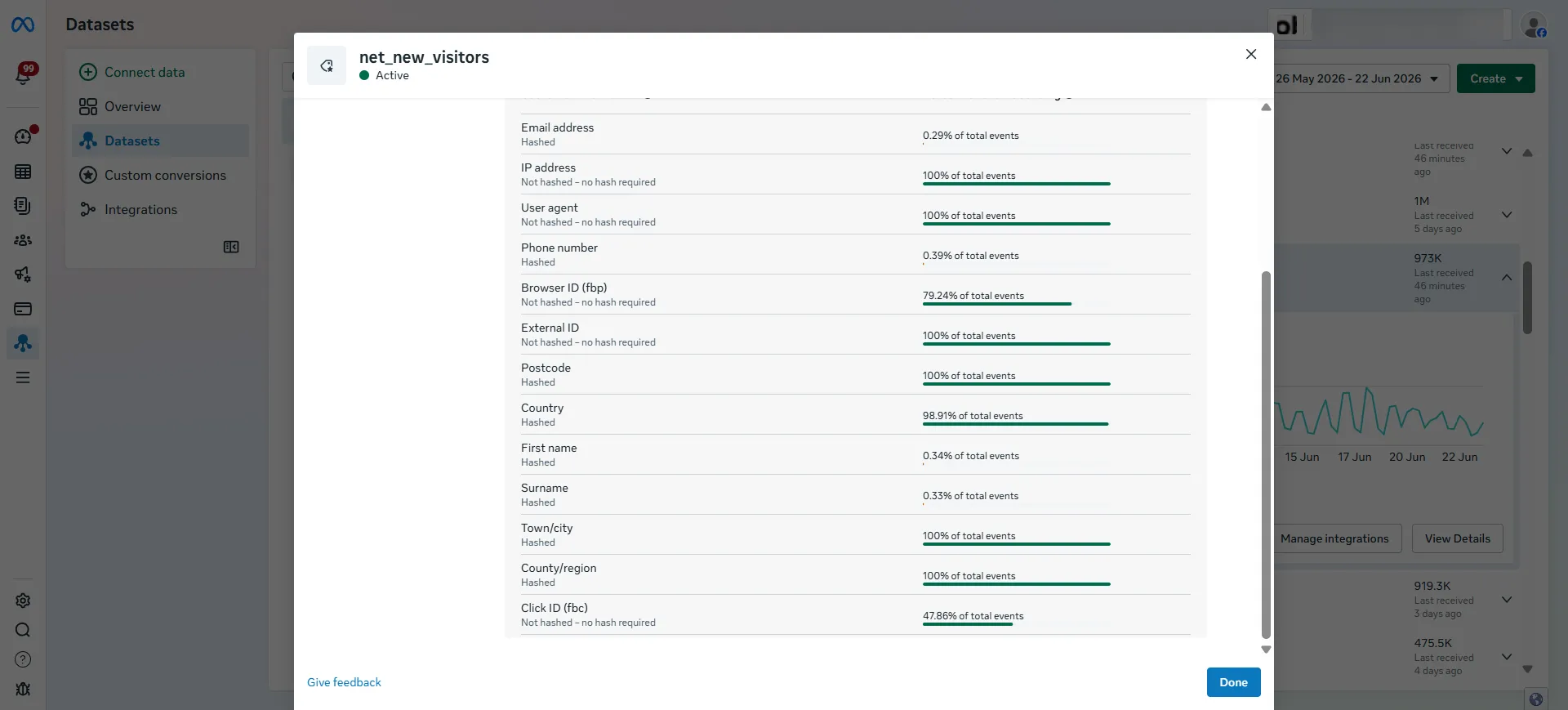
Before you trust the New Customer Purchase event, confirm it’s firing cleanly, carrying its mandatory parameters, and actually showing up where it should. Once cl_new_customer_purchase validates and starts appearing in Ads Manager, you know the signal is real and you can build on it.
A signal you haven’t validated is worse than no signal — it’s confident, and wrong.
Step 3 — Measure the Signal
Now that the event is live and trustworthy, put it into your reporting.
Add the New Customer Purchase event as a custom metric in Meta Ads reporting. This is what lets you see — at the campaign, ad set, and ad level — which ones are actually pulling in a higher share of first-time buyers.
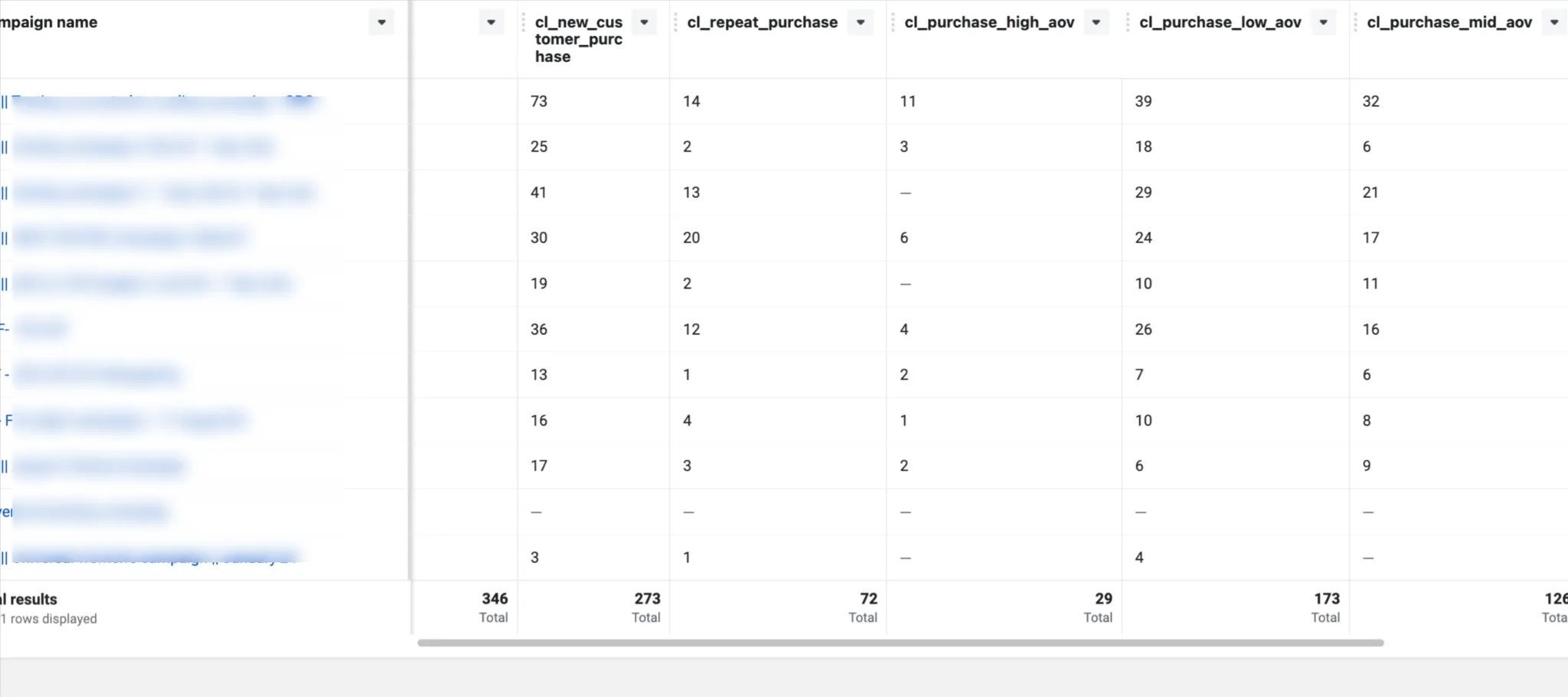
For the first time, “which of my ads bring in new customers” stops being a guess and becomes a column you can sort.
Step 4 — Establish Your Baseline
Here’s the discipline most people skip, and it’s the one that makes everything else meaningful. Before you change a thing, write down where you started.
Once the event validates, start collecting from day one. Track your new-customer purchase share for 7 to 14 days and average it. That average is your baseline.
Say it comes out to 18%. That 18% is now your line in the sand — every future change gets measured against it.
Don’t stop at that one figure. Baseline the metrics around it too:
- ROAS
- Revenue
- Purchase Volume
- Cost per Purchase
With those in place, when you change something later, you can see the whole picture move — not just one number in isolation.
Step 5 — Optimise the Campaign
Only now do you touch the campaign, and this is where it pays off.
Conversion objective: Don’t start from scratch. Take a campaign that’s already performing, add a new ad set, and set the New Customer Purchase event as its conversion event. You’re aiming a proven setup at the right goal.
Creatives: Use creatives relevant to the category. Keep it simple — fit what you sell and who you want.
Exclusions: This is where those two audiences earn their keep. Exclude all customer lists and all website visitors, forcing the ad set to go find genuinely new people instead of coasting on your warm audience.
Then the things you only learn by running these:
- Give the ad set 5 to 7 days to learn. It’ll likely trail your account baseline at first. Don’t panic, don’t pause it — let it run. It normalises toward account-level conversions and ROAS.
- It feeds the top of the funnel, so the final conversion often lands in your retargeting campaign. That’s the funnel working, not the ad set failing.
- Want proof it’s pulling weight? Turn it off and watch the retargeting dip. That’s your incrementality test.
- To scale, add winning creatives in gradually, or duplicate the ad set with them and scale it separately.
How CustomerLabs Powers First-Party Signal Engineering
You could wire this whole pipeline together yourself. A platform like CustomerLabs exists to make it repeatable instead of a one-off engineering project.
It creates the New Customer Purchase signal from your source data (that Order Count = 1 filter) and syncs the signal server-side to Meta via CAPI, and to Google Ads. It feeds your reporting so the new-customer metric shows up where you make decisions. And it drives optimisation, keeping the platforms aimed at new customers instead of letting them drift back to repeat buyers.
Why a first-party data layer instead of just the Pixel?
Because it owns your audience data independently, well beyond the pixel’s short memory window. That’s what makes clean exclusions and a reliable new-customer signal possible in the first place.
The Result: A Real DTC Brand
Watch the sequence play out end to end.
A DTC brand wanted more new customers from Google Ads. Their problem was the one we started with: they couldn’t measure new customer acquisition, because Google kept optimising toward repeat purchasers who were easier to convert.
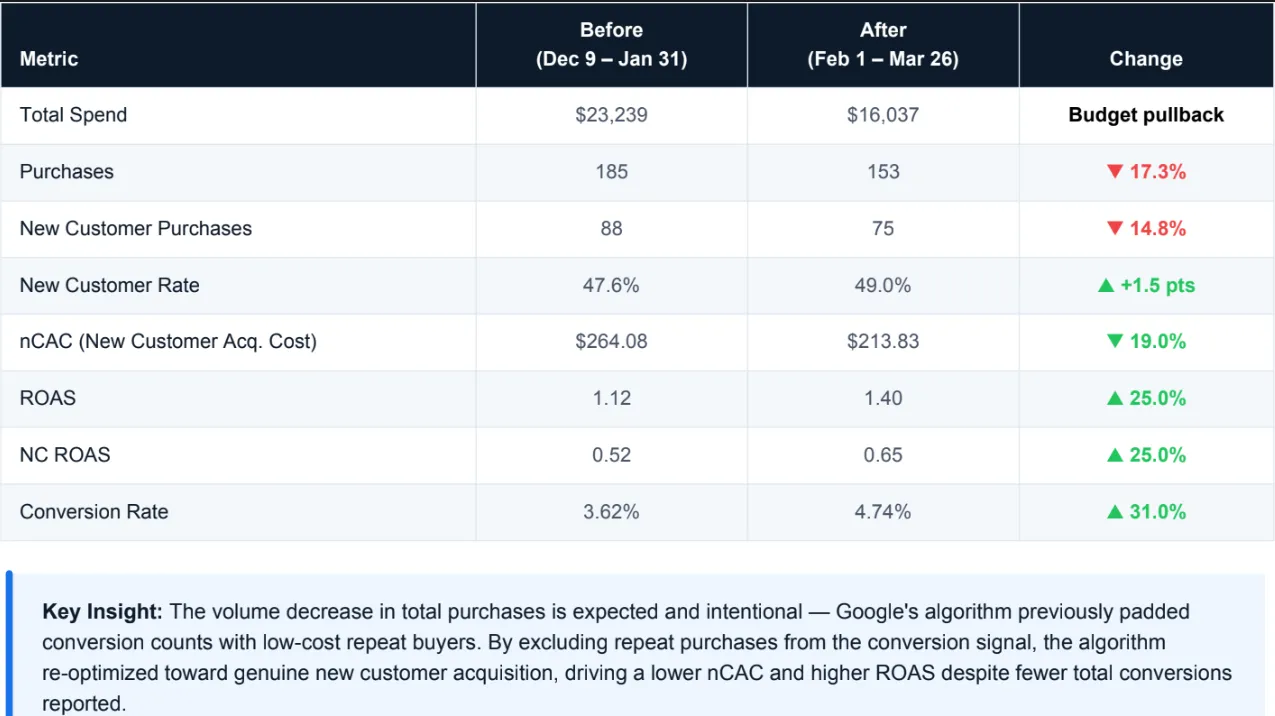
So they followed the playbook. They created a first-party New Customer Purchase signal with CustomerLabs that tracked only first-time buyers. They validated it, started measuring it, and set a baseline. Then they optimised — setting that signal as the primary conversion goal in Google Ads.
Here’s what moved:
| Metric | Result |
|---|---|
| New Customer Acquisition Cost (nCAC) | 19% lower |
| ROAS | 25% better |
| New Customer ROAS | 25% better |
| New Customer Purchase Rate | 47.6% → 49.0% |
Lower nCAC, higher ROAS, and a bigger share of first-time buyers — from the same channel and the same budget. The only real change was giving the algorithm a way to see who was new, and then steering it there.
Measure First, Then Grow
Measuring new customer acquisition is the first step toward improving it. That’s the whole idea, and it’s easy to forget in a world of ROAS dashboards that look great and hide the truth.
The loop is simple once the signal exists: identify your first-time buyers, validate the signal, measure what your campaigns actually drive, set a baseline, and optimise spend toward the people who grow the business. Do that and acquisition stops being a guess and becomes something you can steer.
You can’t improve what you can’t measure. Create the signal, and you can finally measure — and improve — the one thing that actually grows your business.
Read more: Why Meta New Customer Acquisition Campaigns Fail.